The mountain the man-eaters gotWat Phra That Doi Kham
วัดพระธาตุดอยคำ
- Where
- South-west of the city, above Mae Hia and the Royal Park · 18.75981, 98.91793 from OpenStreetMap
- Open
- 06:00–18:00
- Cost
- Free; steep road, parking at the top
- Who is dead
- Pu Sae and Ya Sae, who ate the people who lived here, and stopped
- On
- On a scooter, With a driver
The wat dates itself to 687, which would put it six hundred years ahead of the city. Its draw now is the standing Buddha you can see from the ring road and a reputation for answering what it is asked, paid off in jasmine garlands by the thousand.
Underneath that is an older tenancy, and it is not a Buddhist one. Pu Sae and Ya Sae — Grandfather Sae and Grandmother Sae — were giants out of Ramming Nakhon, ancestors of the Lawa, who were in this valley before the Thai were. Northern tradition calls them เก๊าผี, the stock the rest of Chiang Mai's spirits come off.
Their son took ordination and went to live as a hermit in the caves on the mountain west of here. He is Sudeva. The mountain is Doi Suthep, and it is named after him.
They ate people. Not a figure of speech and not a warning to children — the legend says they took the townspeople day after day until the town emptied and whoever was left ran. Then the Buddha came and taught them, and they took the five precepts and gave up killing, and immediately asked whether the precepts could make an exception, because they still had to eat. One person a month. Refused. One a year. Refused.
The bargain that held was not with him. It was with the lord of the Lawa city: one buffalo a year, against their word to hold the teaching up for five thousand years and keep this valley safe. It is the only ghost on this route that anybody negotiated with, and the terms are still being met — by them, and once a year, below this mountain, by us.
Told here, with a source
Liang Dong — feeding the forestประเพณีเลี้ยงดง
The bargain is paid annually and in public. A buffalo is killed at the clearing and laid out raw. A medium takes the spirits into his body — the pair arrive as the pair, grandfather and grandmother — and the possessed man goes down onto the carcass and eats the meat raw, and when he has finished with the meat he drinks the blood. A cloth painted with the Buddha is held up over the ground while it happens, which is the whole argument of the rite in one image: the precepts are on, and the two of them are being fed anyway.
It is argued over every year in the Chiang Mai press, by people who want it stopped and by the families who hold the right to run it. Go if you are asked. It is not a show, and the clearing is small.
- When
- The fourteenth or fifteenth waxing day of the ninth northern month — late May or June. The date is set locally each year.
- Where
- A clearing at Ban Mae Hia, below the mountain. Not at the wat.
Where this is arguedThe 687 founding date is the wat's own. The rite has been argued over in public for years: Citylife has run the outside account and the descendants' reply, and they do not agree about what it is or who may speak for it. The Fine Arts Department reads the pair against the Lawa iron-working ground they sit on.
Making merit here
Garlands at the wat. A khan tang for the two of them at their shrine below. They are not asked for merit — they are asked for leave, and thanked for keeping to the bargain.
- Khan tang — the tray for a spirit ขันตั้ง — Paired flowers and candles on a tray, set down in front of a spirit or a teacher. 30–150 ฿ ready-made at the shrine. Less if you assemble it.
- Pouring the water กรวดน้ำ — Pour a thin stream of water while the chanting runs, and say who it is for. Nothing.
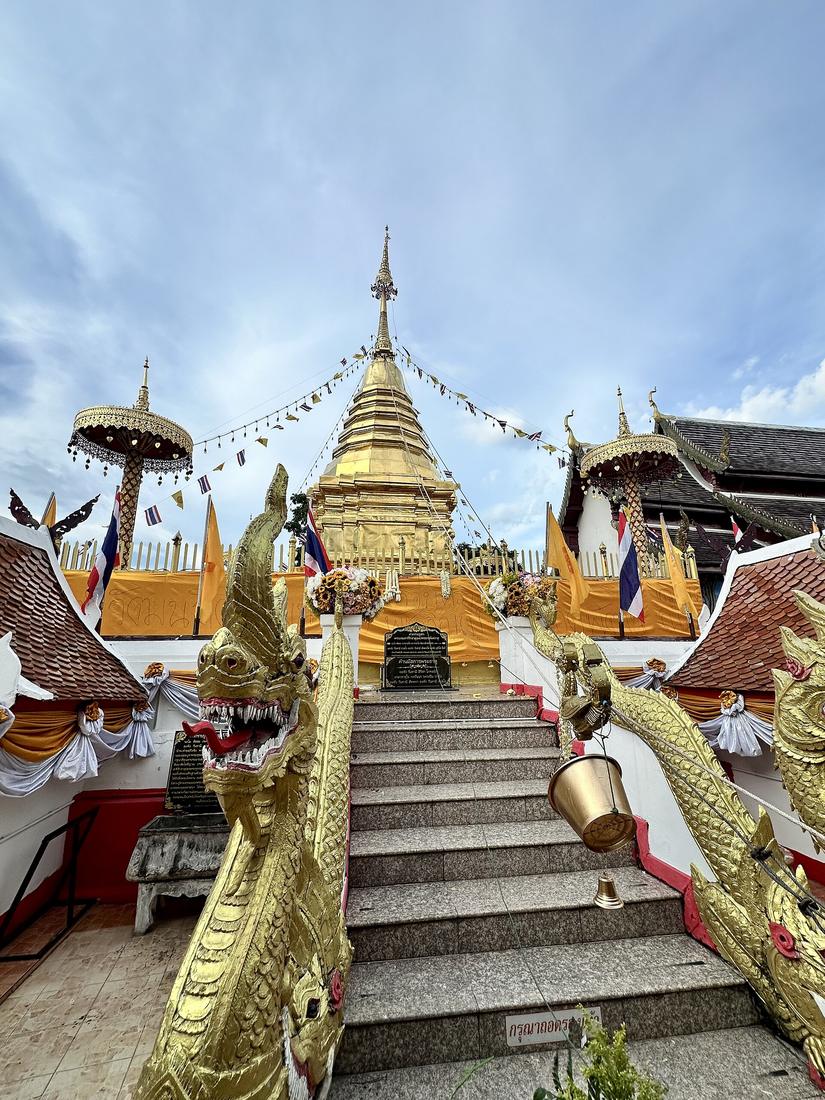 ManoiCMU · CC BY 4.0 · Commons
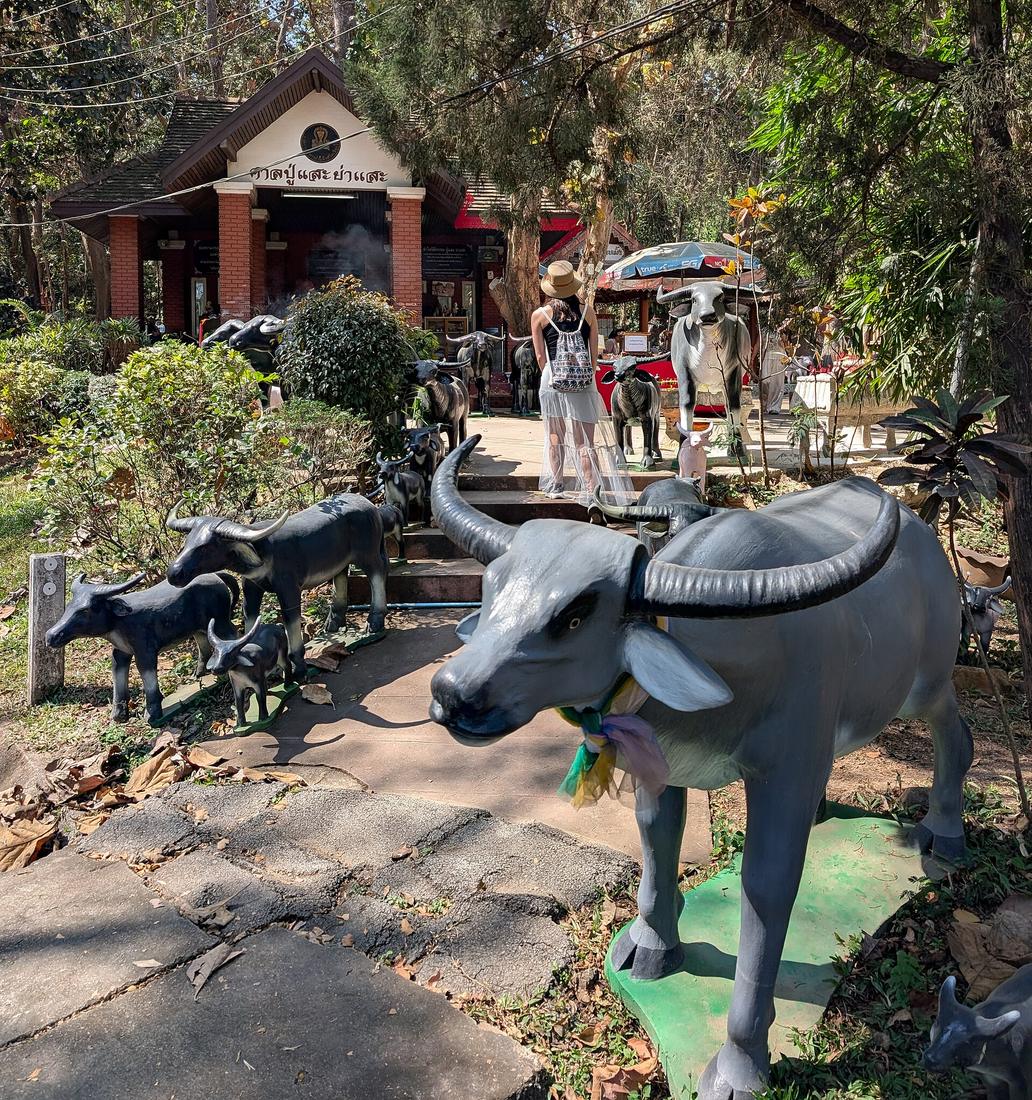 Vano111ru · CC BY-SA 4.0 · Commons
Yours would be better
Every picture here was taken by someone else for some other reason.
Upload yours to Commons under a free licence and the next
build of this page will use it, with your name on it.
Sources for this stop