The wat that was leftWat Umong Maha Therachan
วัดอุโมงค์มหาเถรจันทร์
The wat that was left
Mahathera Chan, the monk it was renamed for, and two centuries of nobody
Stefan Fussan · CC BY-SA 3.0 · Commons
- Where
- Ratchadamnoen soi, Si Phum, inside the north-east quarter. Two minutes from the Three Kings square and nobody is there. · 18.78945, 98.98989 from OpenStreetMap
- Open
- Daylight
- Cost
- Free
- Who is dead
- Mahathera Chan, the monk it was renamed for, and two centuries of nobody
- On
- On foot
Mangrai's foundation, under the name Wat Pho Noi. King Ku Na rebuilt it in 1367 and renamed it for the monk Mahathera Chan, which is the name it still carries.
Then Chiang Mai spent about two hundred years under Burmese rule and a great many wats inside the walls were simply left. This was one. It was declared a national monument in the Royal Gazette on 8 March 1935 and is a working wat again, with the old brick still standing in the yard.
Do not confuse it with the forest Wat Umong at the foot of the mountain, which is a different wat with a different tunnel and is on the bicycle route. Both are named for a tunnel and only one of them gets visitors.
A wat has its own spirit — ผีเสื้อวัด, the one that holds the ground — and the northern position is that it does not leave when the monks do. Two hundred years of Burmese rule emptied wat after wat inside these walls and left the guardians in them. That is what a วัดร้าง is in Chiang Mai: not an empty building, a building with only the caretaker left in it. This one got its monks back. Most did not.
The kind of dead this kind of place holds, in northern reckoning
Where this is arguedDates come from the Thai record and the temple database; the 1367 rebuild is given as B.E. 1910 and converted here.
Making merit here
Sweep, and light a lamp on the old brick. A wat that spent two centuries with nobody to do either is the place for it.
- Sweeping กวาดลานวัด — Pick up a broom that is already leaning there and sweep. Nothing.
- Lighting a pang pratip ผางประทีป — A small clay saucer with a wick, lit at the base of a chedi. 5–20 ฿ each.
- Pouring the water กรวดน้ำ — Pour a thin stream of water while the chanting runs, and say who it is for. Nothing.
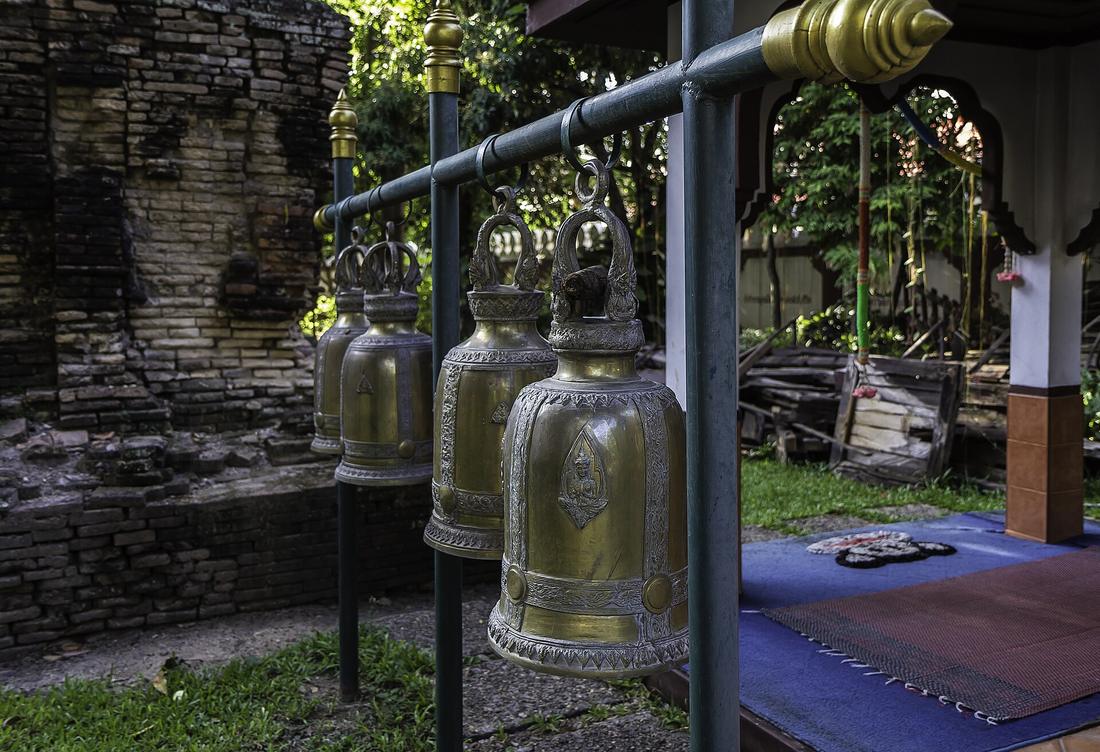 Stefan Fussan · CC BY-SA 3.0 · Commons
Yours would be better
Every picture here was taken by someone else for some other reason.
Upload yours to Commons under a free licence and the next
build of this page will use it, with your name on it.
Sources for this stop