Tunnels and the broken imagesWat Umong
วัดอุโมงค์
Tunnels and the broken images
A field of broken Buddha images, collected from wats that failed
Hotcatssan · CC BY-SA 4.0 · Commons
- Where
- Off Suthep Road, at the foot of the mountain behind the university · 18.78310, 98.95258 from OpenStreetMap
- Open
- 06:00–17:00 roughly
- Cost
- Free; parking donation
- Who is dead
- A field of broken Buddha images, collected from wats that failed
- On
- By bicycle, On a scooter
Ku Na had the tunnels cut into the mound in the 1380s. The story attached is that they were built for a monk who wandered — the walls painted with trees and birds so he would have somewhere to go without leaving.
Behind the mound the ground is covered in damaged images: heads without bodies, torsos, hands. They were gathered here from ruined wats across the north because a broken image is still an image and cannot be thrown away.
The forest around it is the quietest place within twenty minutes of the moat, and the tunnels are cold.
The story told about the tunnels is that they were cut and painted with trees and birds for a monk who wandered, so that he could go somewhere without leaving. It is repeated everywhere and sourced nowhere.
The field behind the mound is the part that is not a story. Broken images, brought here from wats that failed across the north — heads, torsos, hands, stacked in the leaf litter. A damaged image is not rubbish and cannot be thrown out, because the position is that it is still occupied. This is where the north puts what it cannot destroy and will not worship.
The kind of dead this kind of place holds, in northern reckoning
Where this is arguedThe wandering-monk story is repeated everywhere and sourced nowhere this build could check.
Making merit here
A lamp in the tunnel niches, where the wat allows it, and sweeping outside. The image field takes no offering — it is a resting place, not a shrine.
- Sweeping กวาดลานวัด — Pick up a broom that is already leaning there and sweep. Nothing.
- Lighting a pang pratip ผางประทีป — A small clay saucer with a wick, lit at the base of a chedi. 5–20 ฿ each.
- Pouring the water กรวดน้ำ — Pour a thin stream of water while the chanting runs, and say who it is for. Nothing.
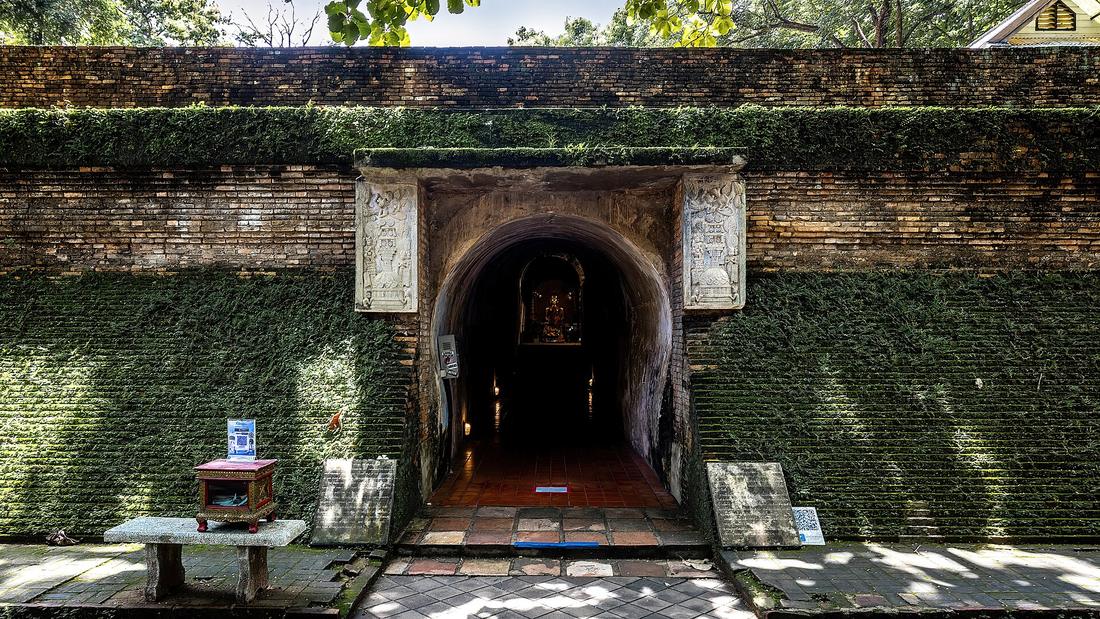 This Photo was taken by Supanut Arunoprayote . Feel free to use any of my images, but please mention me as the author and may send me a message. (สามารถใช้ภาพได · CC BY 4.0 · Commons
Yours would be better
Every picture here was taken by someone else for some other reason.
Upload yours to Commons under a free licence and the next
build of this page will use it, with your name on it.
Sources for this stop