The capital the river tookWiang Kum Kam
เวียงกุมกาม
The capital the river took
A whole town's worth, under three metres of river sand
Mathew Schwartz · CC BY-SA 4.0 · Commons
- Where
- About 5 km south of the old city, Saraphi side of the Ping · 18.75104, 98.99866 from OpenStreetMap
- Open
- 08:00–17:00 at the visitor centre; the ruins are spread through a living village
- Cost
- Free to walk. Horse cart or tram from the centre, 200–500 ฿.
- Who is dead
- A whole town's worth, under three metres of river sand
- On
- By bicycle, On a scooter, With a driver
Mangrai built here first, in the 1280s, and it flooded. He moved the capital to the higher ground that became Chiang Mai in 1296, and Kum Kam went on being lived in for another two centuries before the river ended the argument.
Radiocarbon on charcoal in the flood sand puts the burial after about 1477–1512. The site was found again in 1984 when the Fine Arts Department dug at Wat Chang Kham.
More than twenty wats have been excavated so far. They sit in holes below the level of the road, between houses, with people's washing strung up above them.
A capital under three metres of river sand, and the wats coming back out of it one at a time since 1984 — below the level of the road, between houses, with washing strung up over them. The story people bring to it is a city that went on underneath, which is a folk tale and is told as one. The part that is not folklore is that these are graves and shrines that were covered while in use, and that the people whose gardens they are in have been living on the roof of them for five hundred years.
The kind of dead this kind of place holds, in northern reckoning
Where this is arguedWhether one flood did it or a run of them. The paleoflood work argues for a large single event in that window.
Making merit here
Wat Chang Kham is a working wat standing on top of the buried one, and takes a tray or a lamp. At the excavated ruins, nothing — they are archaeology, and wax marks brick.
- Lighting a pang pratip ผางประทีป — A small clay saucer with a wick, lit at the base of a chedi. 5–20 ฿ each.
- Offering a tung ตานตุง — A long narrow banner, raised at the wat, offered in a dead person's name. 20–150 ฿ paper or cloth. A metal one runs higher.
- Pouring the water กรวดน้ำ — Pour a thin stream of water while the chanting runs, and say who it is for. Nothing.
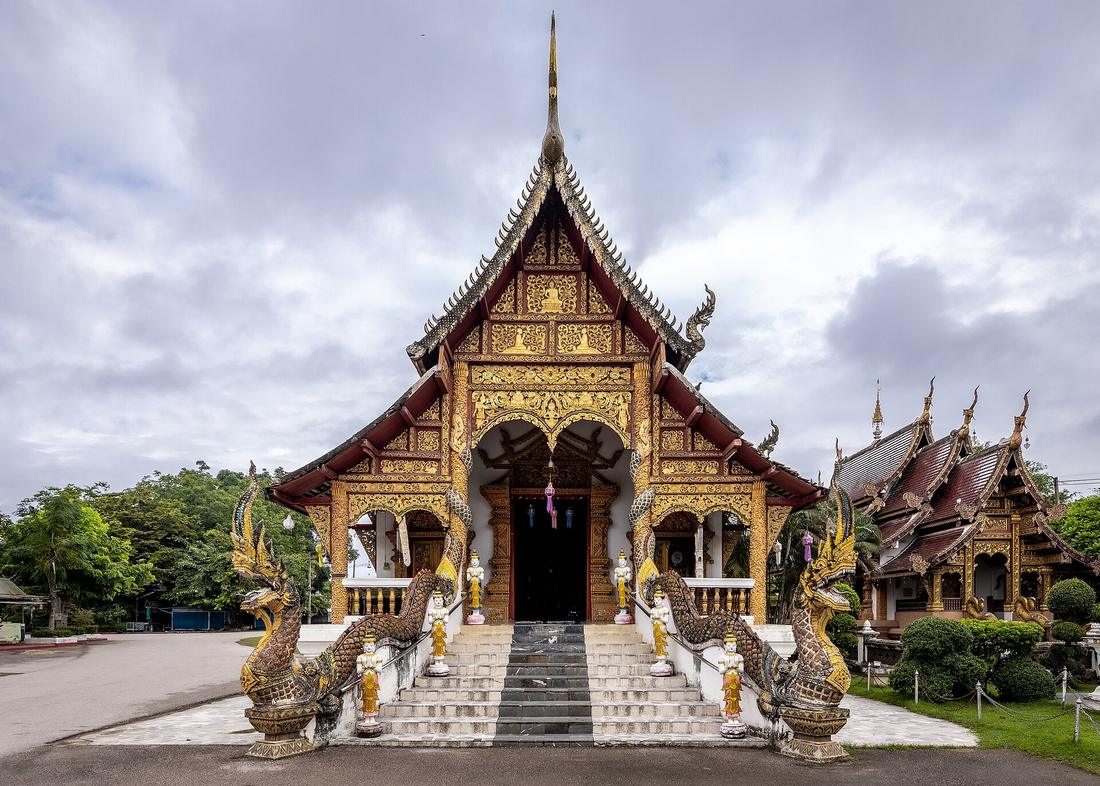 This Photo was taken by Supanut Arunoprayote . Feel free to use any of my images, but please mention me as the author and may send me a message. (สามารถใช้ภาพได · CC BY 4.0 · Commons
Yours would be better
Every picture here was taken by someone else for some other reason.
Upload yours to Commons under a free licence and the next
build of this page will use it, with your name on it.
Sources for this stop