Signs and objectsThe kilometre stone
หลักกิโลเมตร
Concrete, white, waist-high, and the only thing on the road that always tells the truth.
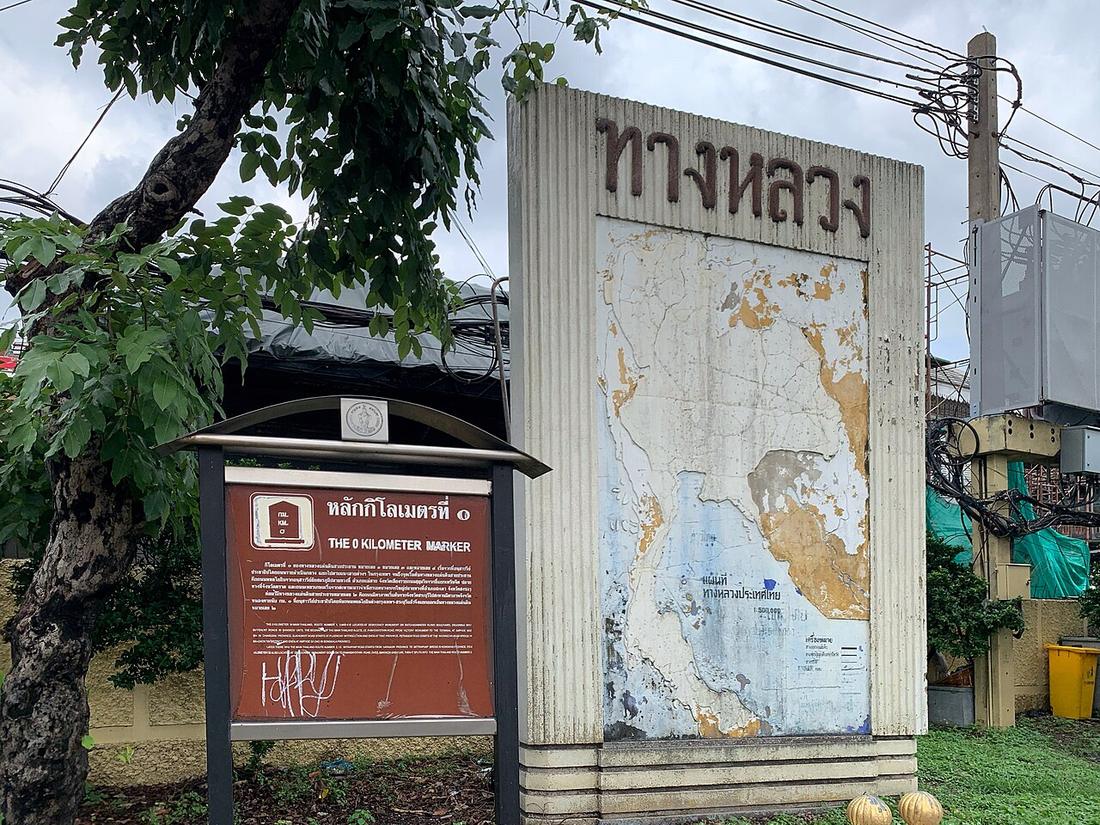 Chainwit. · CC BY-SA 4.0
What it is
Thailand marks its highways with a numbered stone every kilometre. On a road with no phone signal they are the navigation.
The long version
Inference — the pleasure in them is the counting. On Route 108 the numbers restart at zero at the Hot roundabout and run to Mae Hong Son, so the stone tells you exactly how much of the 265 kilometres is behind you. Watching a number come down over a long afternoon is a quiet and surprisingly good way to spend one.
They are also how you describe where you are to somebody else. A Thai driver will say kilometre thirty-two rather than a place name, because between towns that is the only address there is.
Tradition holds — the small numbers under the big ones on some stones are the distance to the next town and the one after it, which turns every stone into a small map.
Runs with
- roadRoute 108 — Where the numbers restart at zero.
- townHot — The roundabout that resets them.
- artThe 1,864 sign — The other thing by the roadside with a number on it.
Named here by
- hazardAnnoyances — What tells you where you are when the phone does not.
- artThe 1,864 sign — The other roadside number, and the useful one.
Where each claim comes from
| Field | Tier | Source | Note |
|---|---|---|---|
| default | cited | ทางหลวงแผ่นดินหมายเลข 108 — Wikipedia (th) | |
| text_th | inference | written in Thai by this project, not machine-translated |
Sources
- ทางหลวงแผ่นดินหมายเลข 108 — Wikipedia (th)
- Road signs in Thailand — Wikipedia (en)
cited Cited — a named source, linked · harvested Harvested — fetched from an open dataset, with its licence · tradition Tradition — general knowledge of the tradition, hedged · inference Inference — this project's own reasoning from the above · field Field — someone stood there