What you eatThua nao
ถั่วเน่า · thua nao
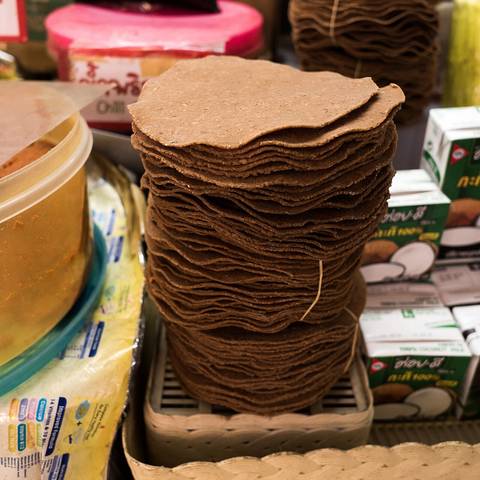
Fermented soybean, dried into discs and toasted. The Shan kitchen's salt.
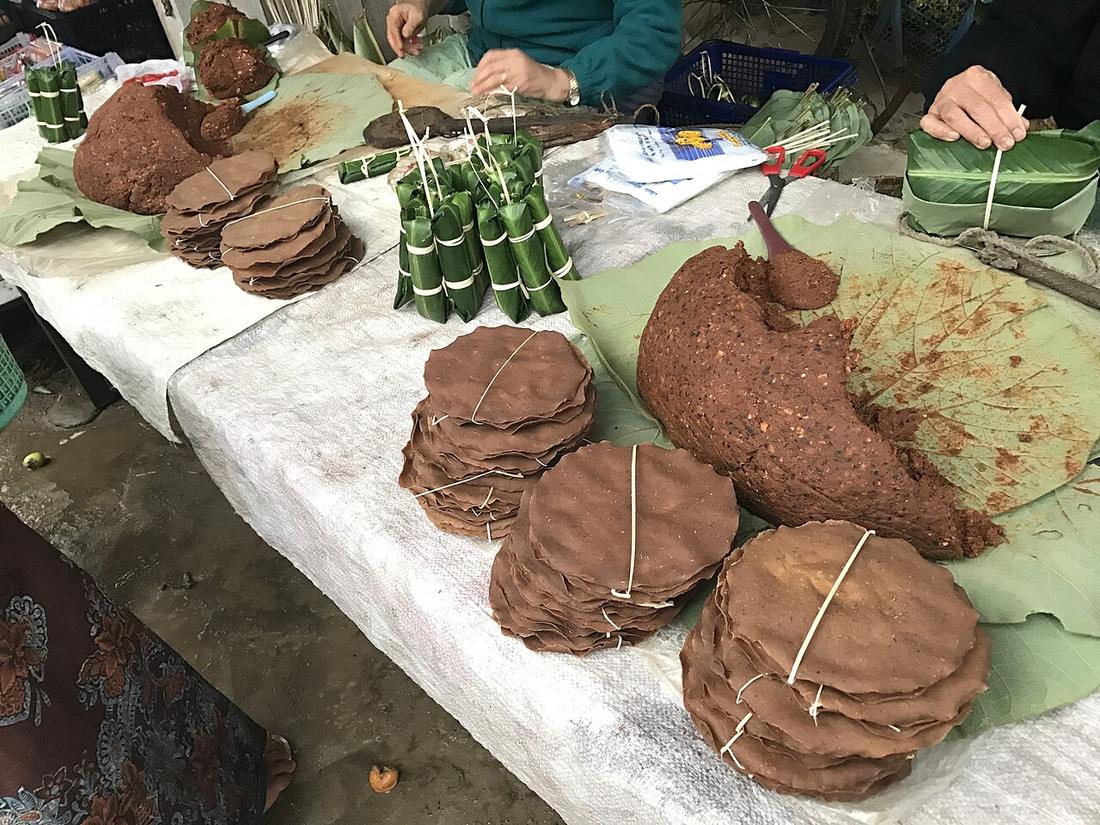 Sai Htun Lin · CC BY-SA 4.0
What it is
Soybeans fermented, mashed, pressed flat and sun-dried into thin discs, then toasted or fried and crumbled into food. The name means rotten bean and nobody minds.
The long version
Tradition holds — this is the northern and Shan answer to fish sauce, in a region far from the sea. Where central Thailand reaches for nam pla, the hill kitchens reach for a toasted disc of fermented bean.
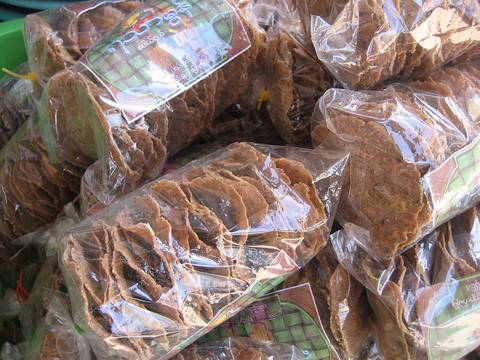
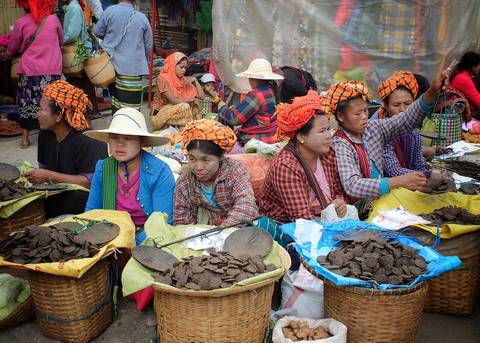
Inference — it is the single ingredient that most reliably tells you which side of the cultural line you are eating on, and it is easy to miss because it arrives crumbled into something else. Ask, and people will show you the discs — they are stacked like coasters in every market on the western half of this loop.
The smell on a toasting grill is strong and it is the good kind.
Runs with
- personThe Shan — Whose kitchen it belongs to.
- dishThe morning market — Stacked like coasters, on every table.
- dishKanom jeen nam ngiao — Often in the bowl without being announced.
Where each claim comes from
| Field | Tier | Source | Note |
|---|---|---|---|
| default | tradition | ||
| text_th | inference | written in Thai by this project, not machine-translated |
Sources
- Soybean — Wikipedia (en)
- Burmese cuisine — Wikipedia (en)
- Shan people — Wikipedia (en)
cited Cited — a named source, linked · harvested Harvested — fetched from an open dataset, with its licence · tradition Tradition — general knowledge of the tradition, hedged · inference Inference — this project's own reasoning from the above · field Field — someone stood there