What you eatKanom jeen nam ngiao
ขนมจีนน้ำเงี้ยว · khanom chin nam ngiao
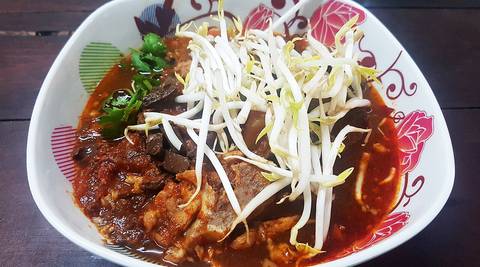
A tomato-and-pork broth with a flower in it, over fermented rice noodles.
 แอนเดอร์สัน · CC BY-SA 4.0
What it is
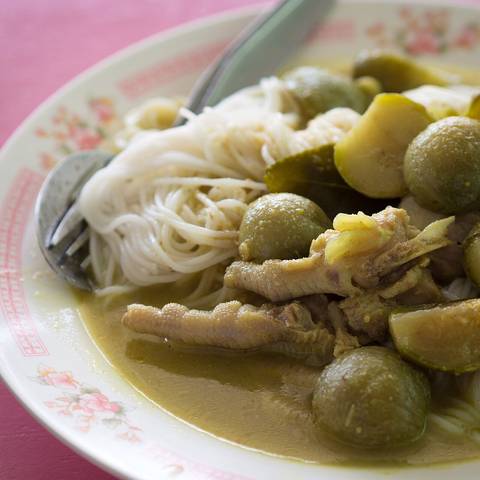
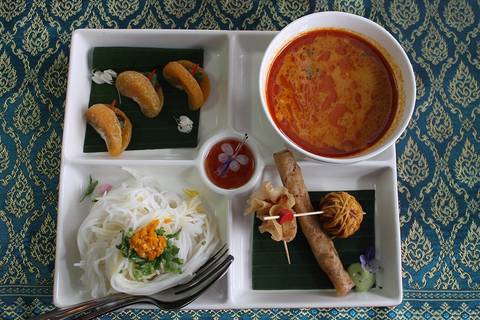
Fermented rice vermicelli under a thin, sour, red broth of tomato and pork, with dried kapok flower, pork blood cubes and a pork rib.
The long version
The name is the giveaway: ngiao is an old Thai word for the Shan. This is Shan food that northern Thailand adopted, and on the western half of this loop you are eating it where it comes from rather than where it travelled to.
Tradition holds — the dried kapok flower, dok ngiao, is the ingredient that makes it what it is: it goes soft in the broth and adds body rather than flavour. Without it the bowl is a tomato soup.
Inference — it is lighter than khao soi and served all day, which makes it the better bet when you arrive somewhere at three in the afternoon and the khao soi has gone.
Runs with
- dishKhao soi — The heavier bowl, and the one that sells out.
- personThe Shan — Whose dish it is, and whose name is in it.
- townMae Sariang — Deep in the country it belongs to.
Named here by
- dishKhao soi — The other northern noodle bowl, and the Shan one.
- dishThua nao — Often in the bowl without being announced.
Where each claim comes from
| Field | Tier | Source | Note |
|---|---|---|---|
| default | tradition | ||
| text_th | inference | written in Thai by this project, not machine-translated |
Sources
- Thai cuisine — Wikipedia (en)
- Shan people — Wikipedia (en)
cited Cited — a named source, linked · harvested Harvested — fetched from an open dataset, with its licence · tradition Tradition — general knowledge of the tradition, hedged · inference Inference — this project's own reasoning from the above · field Field — someone stood there