storyRama V, and the making of a national sport
รัชกาลที่ 5 กับการทำให้เป็นกีฬาของชาติ · ratchakan thi ha
The state takes the sport up: tournaments, a royal boxing corps, and titles for winners.
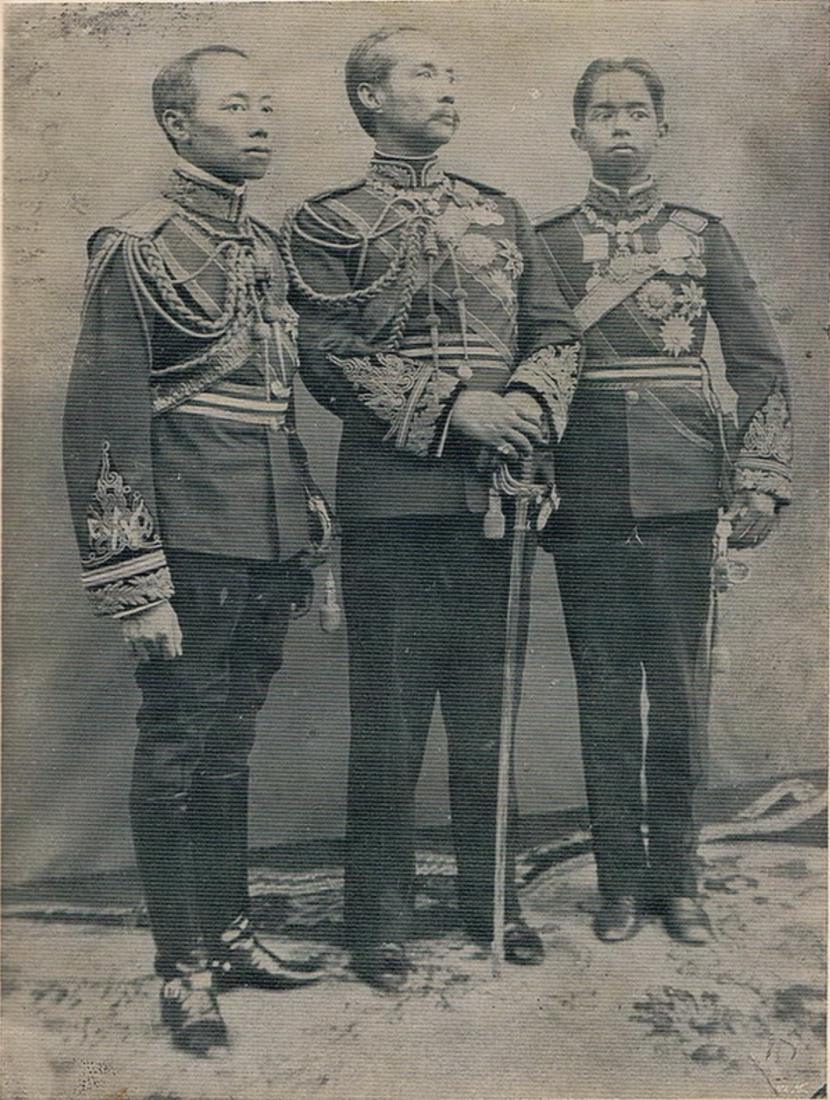 Prajadhipok · Public domain
What it is
Under King Chulalongkorn, 1868 to 1910, boxing was organised from the top: nationwide tournaments, a Royal Boxing Centre — Muay Luang — and the noble rank of Muen granted to the winner of each match.
The long version
The Royal Boxing Centre administered both muay thai and krabi-krabong, on the model of the Ayutthaya boxers' regiment. In 1887 the Department of Education was established and muay thai went into the national curriculum, for teacher-training colleges and for the Chulachomklao Royal Military Academy.
In 1910 the king called fighters in from the provinces to fight at the cremation of his son Prince Urubongse, and gave the rank of muen to the three best — from Lopburi, Khorat and Chaiya.
Inference — that is the whole machinery in one reign. Select by tournament, reward with rank, put it in the schools, and then name the regional styles after the three men who won at a funeral. The four lines are downstream of a prize list.
Connected to
- The four lines, and the rhyme that ranks them What came out of it.
- The ring arrives, 1921 What came next.
- How old is any of this The argument.
Where each claim comes from
| Field | Tier | Source | Note |
|---|---|---|---|
| default | cited | Muay Thai — Wikipedia (en) | |
| text_th | inference | written in Thai by this project, not machine-translated |
Sources
- Muay Thai — Wikipedia (en)
- Chulalongkorn — Wikipedia (en)
cited Cited — a named source, linked · harvested Harvested — fetched from an open dataset, with its licence · tradition Tradition — general knowledge of the tradition, hedged · inference Inference — this project's own reasoning from the above · field Field — someone stood there