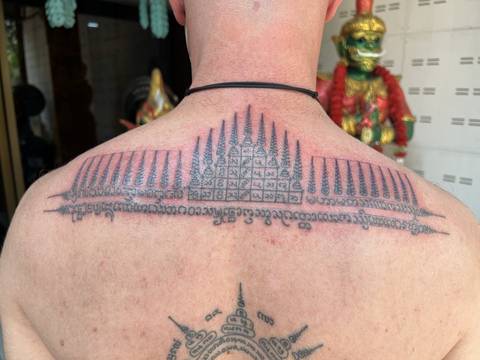
Gao yod, the nine spires
เก้ายอด
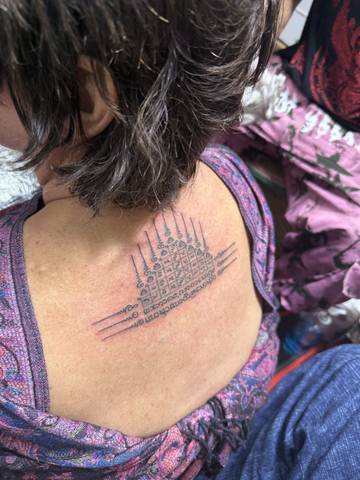
A column of nine spires, placed in the centre of the upper back and running a little onto the neck. At Wat Bang Phra it is the standard first tattoo…
The headband, the armbands, the dance, and the four instruments playing under all of it.
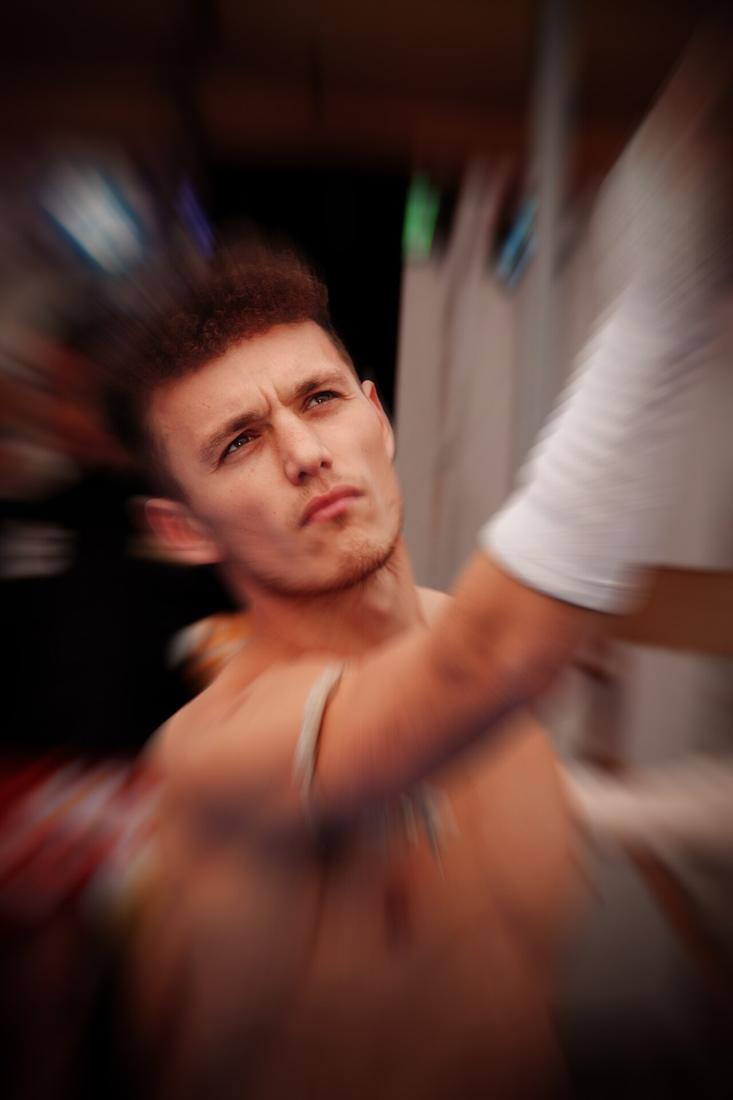 Kru Tony Moore · CC BY-SA 4.0
Two halves. Wai khru is paying respect to the teacher — kneeling, bowing three times toward the corner. Ram muay is the dance that follows, which is the fighter's own and belongs to his gym.
Wai khru is not a boxing ritual. The Thai article on it lists the same ceremony for school teachers, for shadow puppetry, for krabi-krabong, and for writing poetry: the form belongs to apprenticeship in general, and boxing is one of its borrowers.
What the fighter is doing in the second half is more specific. A ram muay is taught, it is a gym's signature, and a Thai watching can often name the camp from it. It also tells the other corner something: a man who takes his time in the dance is making a statement about his own composure while the other man stands there in the cold.
Inference — the reason the ceremony survived professionalisation intact, when the rope, the bare feet and the open-weight matchmaking all went, is that it costs the promoter nothing and fills four minutes of a television slot.
Full record — The dance before the fight
Yant on skin, yant on the cloth at the arm, yant rolled in metal at the waist, yant braided into the cord on the head. A fighter walking to the ring is usually wearing three of the four.
The headband, the armbands, the dance before the fight, and the tattoo under the shirt.
เก้ายอด
A column of nine spires, placed in the centre of the upper back and running a little onto the neck. At Wat Bang Phra it is the standard first tattoo…
ข้อห้าม
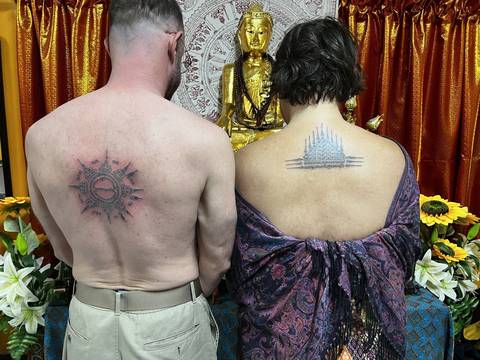
A yant is conditional. The bearer accepts precepts and taboos with it, and the power holds only while those are kept.
มงคล
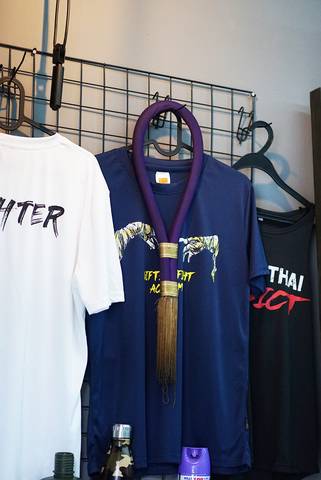
The cord headband worn into the ring and removed before the first bell. It belongs to the gym, not the man wearing it.
ประเจียด
Cloth or cord tied round the upper arms, worn through the fight.
สักยันต์
A tattoo that is a working object: geometry and syllables in an old script, applied by a master, carrying protection, fortune, charisma or fear — and…
เสือเผ่น
A tiger in mid-leap, usually one on each shoulder blade, for strength, command and the turning away of an attack.
Four instruments play every fight in Thailand, live, and they speed up when it matters.
ฉิ่ง
A pair of thick bronze cups on a cord, struck together. Closed, they say *ching*; let ring, they say *chap*, and the two syllables are the name and…
กลองแขก
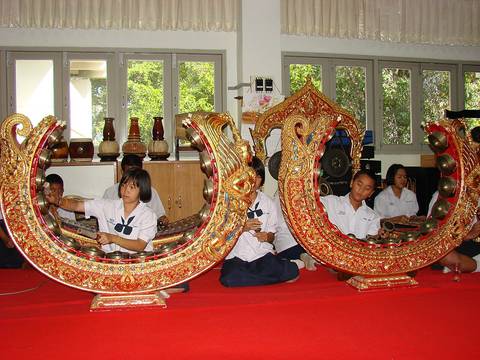
Two long double-headed drums played with the hands, one pitched higher than the other. Thai names them *tua phu* and *tua mia* — the male and the…
กลองสะบัดชัย
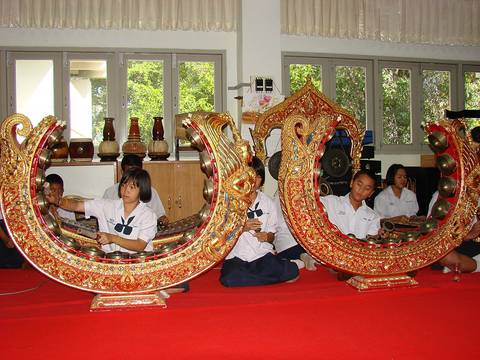
The Lanna war drum, beaten going out to battle for good fortune and to hold the soldiers' nerve. Three old melodies are named: *Chaiphaeri*…
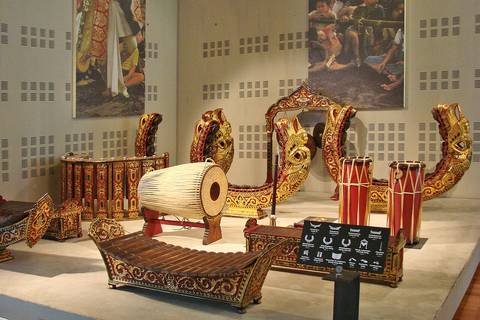
ปี่ชวา
A double-reed pipe in two pieces — a bored body with seven finger holes and a thumb hole, and a flared bell — with a reed made of four folded pieces…
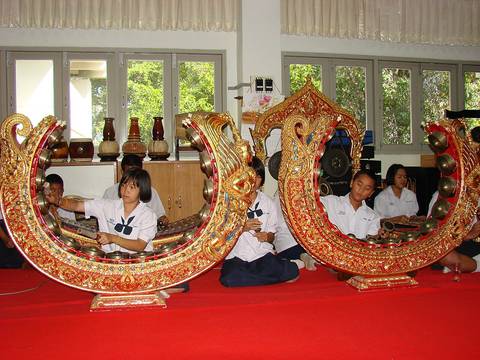
วงปี่กลอง
Every stadium fight in Thailand is played live by a small band: an oboe, a pair of drums and a pair of hand cymbals, sitting at the ring apron.