ritualThe mongkhon
มงคล · mongkhon
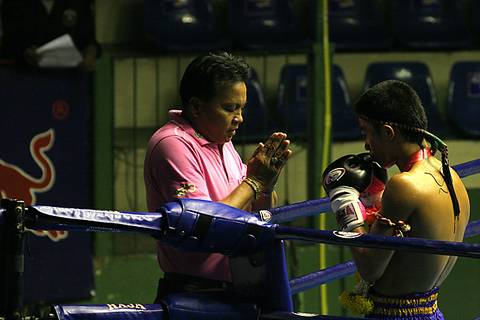
The trainer puts it on. The trainer takes it off. Never the fighter.
 B20180 · CC BY-SA 4.0
What it is
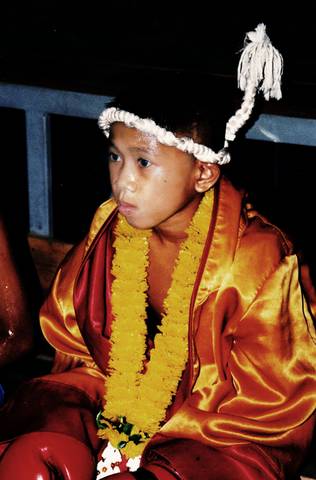
The cord headband worn into the ring and removed before the first bell. It belongs to the gym, not the man wearing it.
The long version
The origin the English article gives is domestic: when Siam was at war, young men tore a strip from a mother's or a lover's clothing and wore it into the fight for luck and against harmful spirits.
What it means now is institutional. A trainer presents the mongkhon when he judges a fighter fit to represent the gym, and takes it off in the corner after the dance. Fighters commonly bring it to a monk to be blessed first, whether or not they are Buddhist.
Two things follow that visitors get wrong. It is not a rank, and it is not yours: the shop-bought mongkhon hanging in a hotel room is a souvenir of an object that only means anything when someone else puts it on your head. And it does not stay on during the fight — a mongkhon in the ring at the bell is a film, not a card.

Connected to
- The dance before the fight When it comes off.
- The armbands The armband version.
- Sak yant The one that cannot be taken off.
Named here by
- The armbands The headband.
- Sak yant The same thing, on cord.
- The dance before the fight Worn through it, and taken off at the end.
- Takrut The same thing on cord.
- Women in the ring The other consecrated object.
Where each claim comes from
| Field | Tier | Source | Note |
|---|---|---|---|
| default | cited | Muay Thai — Wikipedia (en) | |
| text_th | inference | written in Thai by this project, not machine-translated |
Sources
- Muay Thai — Wikipedia (en)
cited Cited — a named source, linked · harvested Harvested — fetched from an open dataset, with its licence · tradition Tradition — general knowledge of the tradition, hedged · inference Inference — this project's own reasoning from the above · field Field — someone stood there