ritualThe rules that come with it
ข้อห้าม · kho ham
It works while you keep them, and it fades anyway.
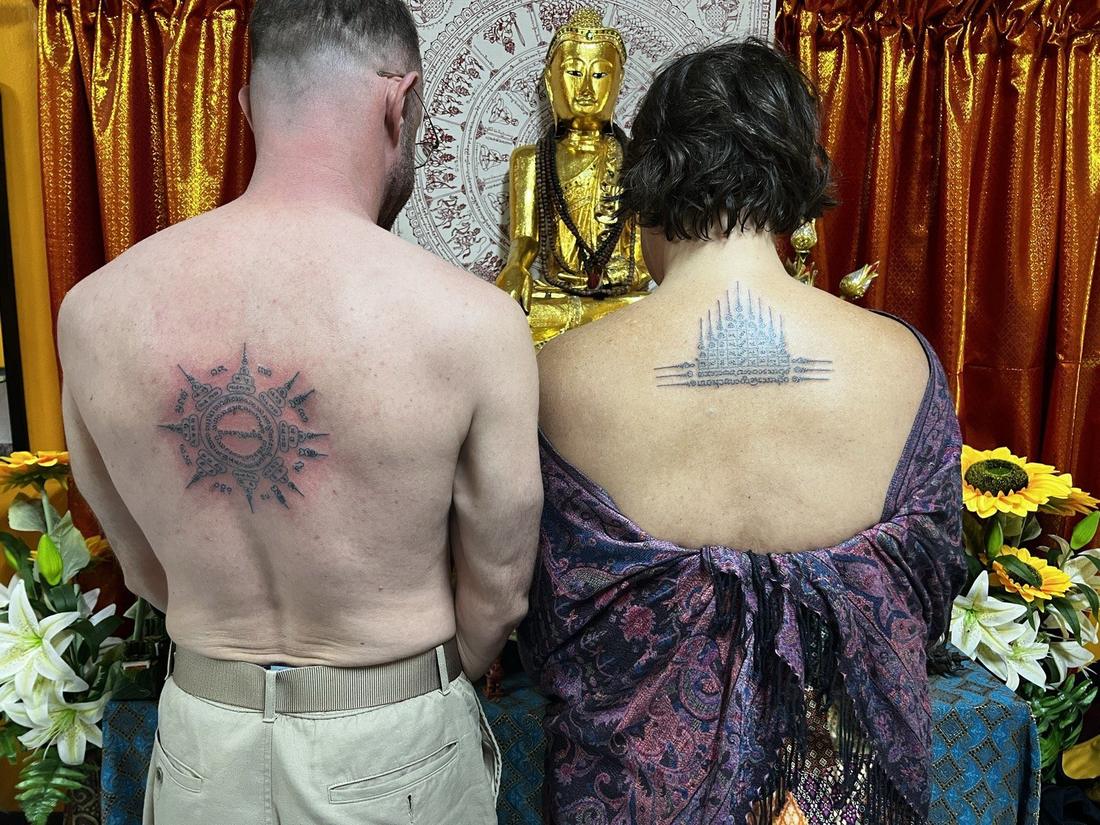 NaN · Taken at Sak Yant Chiang Mai, used with permission · CC BY 4.0
What it is
A yant is conditional. The bearer accepts precepts and taboos with it, and the power holds only while those are kept.
The long version
The English article puts it in one clause: the tattoo confers its powers only so long as the bearer observes certain rules and taboos, which can include abstaining from a particular food. Different masters set different lists, and the list is part of what you are receiving.
And separately from conduct, the power decreases with time. That is why Wai Khru exists: once a year the disciples come back to the master's parlour to have the yant honoured, blessed and re-empowered.
Inference — these two facts together are what make sak yant a relationship rather than a purchase. A tattoo you can buy in an afternoon and never think about again is a different object, whatever is drawn on it.
Connected to
- Sak yant The practice.
- Wat Bang Phra Where Wai Khru happens.
- The dance before the fight The same two words, in the ring.
Named here by
- Sak yant What keeps it working.
- Wat Bang Phra What you take on with it.
Where each claim comes from
| Field | Tier | Source | Note |
|---|---|---|---|
| default | cited | Yantra tattooing — Wikipedia (en) | |
| text_th | inference | written in Thai by this project, not machine-translated |
Sources
- Yantra tattooing — Wikipedia (en)
- Wat Bang Phra — Wikipedia (en)
cited Cited — a named source, linked · harvested Harvested — fetched from an open dataset, with its licence · tradition Tradition — general knowledge of the tradition, hedged · inference Inference — this project's own reasoning from the above · field Field — someone stood there