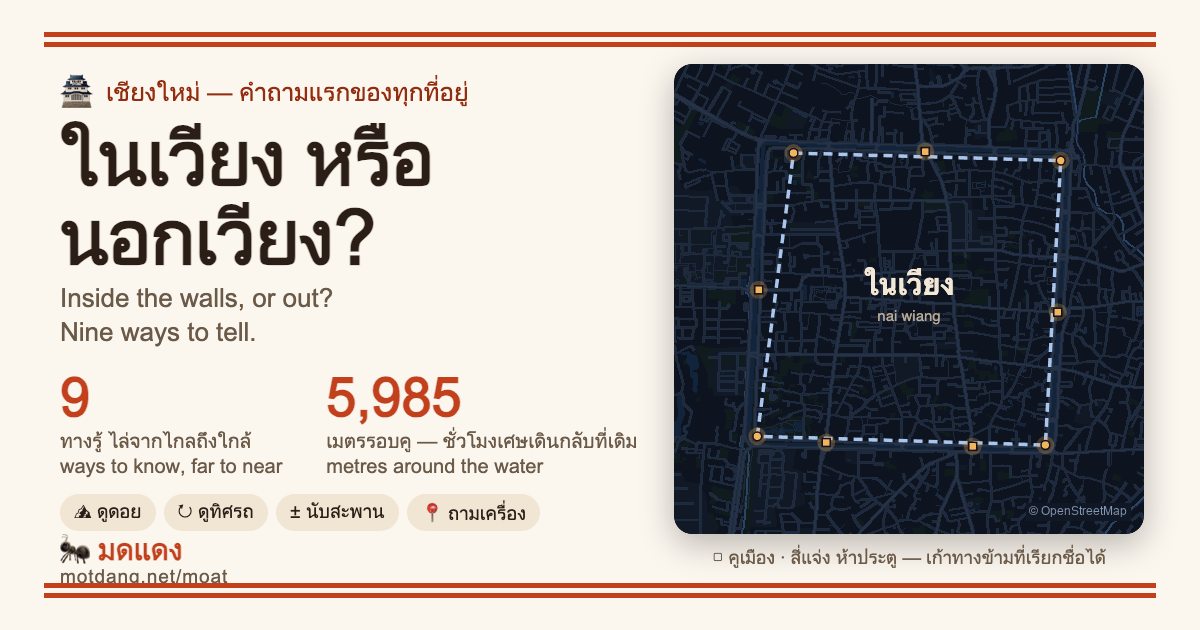
ในเวียง หรือ นอกเวียง? · Inside the walls, or out?
อยู่เชียงใหม่ไม่กี่วันก็จะเจอคำถามที่คนเมืองใช้แบ่งทุกที่อยู่: ในเวียงก่อ — เวียง เป็นคำล้านนา แปลว่าเมืองที่มีกำแพงมีคู คูเมืองรูปสี่เหลี่ยมขุดไว้แต่แรกสร้างเมื่อ พ.ศ. ๑๘๓๙ ด้านละราวกิโลเมตรครึ่ง เดินรอบ 5,985 เมตร ทุกอย่างในเมืองนี้เรียงตัวรอบคำตอบของคำถามเดียวนี้ แต่พอยืนอยู่กลางซอย ใครจะรู้ว่าตัวเองอยู่ข้างไหน — หน้านี้รวมเก้าทางรู้ เรียงจากทางที่มองเห็นแต่ไกล ไปจนถึงทางที่ต้องก้มอ่านกระดาษ · A few days in Chiang Mai and the sorting question arrives: nai wiang ko? — are you inside? เวียง wiang is the Lanna word for a walled, moated town. The square moat (คูเมือง khu mueang — khu, dug channel + mueang, town) has ringed this one since its founding in 1296: about a kilometre and a half per side, 5,985 m around. The whole city sorts itself by which side of that water you stand on — and yet, standing in the middle of a soi, who can tell? Here are nine ways to know, ordered from the clue you can read at ten kilometres down to the one printed on an envelope.
เก้าทางรู้ สำหรับเก้าทางข้าม — คูเมืองมีประตูห้า แจ่งสี่ รวมเก้าจุดข้ามที่คนเมืองเรียกชื่อได้ เลขเก้าไม่ได้ตั้งใจ แต่ตั้งใจเก็บไว้ · Nine ways to know, for the nine named crossings — five gates and four chaeng corners. Nobody planned that the counts would match; it is the kind of coincidence one keeps.
๑ดอยคือกำแพงทิศตะวันตก · The mountain is the west wall
ใช้ได้จากทุกที่ในเมือง — ระยะ ๑๐ กิโลเมตร · works from anywhere in town — the 10 km clue
เชียงใหม่มีเข็มทิศที่มองเห็นด้วยตา: แนวดอยสุเทพยืนเต็มขอบฟ้าตะวันตกเสมอ หันหน้าเข้าดอยคือหันไปตะวันตกโดยประมาณ แล้วทุกทางในหน้านี้ก็เริ่มใช้ได้ จากใจกลางเวียง ยอดดอยอยู่ทางราว ๆ 285° ห่าง 7 กิโลเมตร (คำนวณจากหมุดในสารบัญ) ตอนเย็นพระอาทิตย์ตกหลังแนวดอยพอดี · Chiang Mai carries a compass you can see: the Doi Suthep ridge fills the western horizon, always. Face the mountain and you face roughly west — and every other way on this page starts working. From the moat's centre the summit bears about 285°, 7 km out (computed from the catalogue's own pin). In the evening the sun goes down behind the ridge.
มดวัดเองจากเส้นระดับของหน้าดอย (อ่าน 2026-08-27): กำแพงฝั่งตะวันตกอยู่สูง 316 ม. ฝั่งตะวันออก 313 ม. — พื้นทั้งเวียงเอียงออกจากดอยลงไปหาแม่น้ำ น้ำในคูจึงเข้าที่แจ่งหัวลินแล้วไหลไปทางก๊ะต๊ำ ตามที่ชื่อสองแจ่งบอกไว้ก่อนแล้ว · Measured from the doi page's own elevation transect (read 2026-08-27): the west wall stands at 316 m, the east at 313 m — the whole town leans away from the mountain, down toward the river. Moat water enters at Chaeng Hua Lin and drains toward Katam, exactly as the two corner names said all along.
จุดอ่อน · the catch — ในซอยแคบ ตึกบังดอยได้ และหน้าฝนเมฆก็บังทั้งแนว — วันไหนมองไม่เห็น ใช้ทางถัดไป · Deep in a narrow soi the buildings hide the ridge, and in the rainy season the clouds do — on those days, read on.
๒อ่านเส้นขอบฟ้า · Read the skyline
ใช้ได้ในระยะไม่กี่ร้อยเมตร · the few-hundred-metre clue
ในเวียง ของที่สูงที่สุดคือยอดเจดีย์ หลังคาวัด กับยอดตาล — ตึกสูงเป็นแถบ ๆ ยืนอยู่นอกเวียงทั้งนั้น ถ้าคอนโดตั้งอยู่ใกล้ ๆ ตัวจนต้องแหงนคอ แทบแน่ว่ากำลังยืนอยู่นอก ถ้ารอบตัวไม่มีอะไรเกินยอดตาลเลย น่าจะอยู่ใน · Inside the walls the tallest things are chedi spires, temple roofs and palm crowns — the tower blocks all stand outside. If a condo looms close enough to crane your neck at, you are almost certainly outside; if nothing near you outgrows a palm tree, you are probably in.
จุดอ่อน · the catch — ทางนี้บอกเป็นแนวโน้ม ไม่ใช่เส้นแบ่งคม ๆ — ยืนริมคูฝั่งในก็เห็นตึกฝั่งตรงข้ามได้ · A tendency, not a knife edge — from the inner bank you can see towers across the water plainly.
๓น้ำจริงกับน้ำหลอก · The water, and its impostors
ใช้ได้เมื่อเห็นน้ำ — ระยะร้อยเมตร · the hundred-metre clue: seeing water
เจอน้ำไม่ได้แปลว่าเจอคูเมืองเสมอไป เมืองนี้มีน้ำหลายสาย คูเมืองคือน้ำนิ่ง เดินเป็นเส้นตรง หักมุมฉาก ขอบเป็นอิฐ แม่น้ำปิงกว้างกว่ามาก ไหลจริง และโค้งตามใจตัวเอง คลองแม่ข่าแคบ คดไปตามหลังบ้าน ส่วนคลองชลประทานอยู่ไกลออกไปทางตะวันตก ถ้าน้ำตรงหน้านิ่ง ตรง และเลี้ยวเป็นมุมฉากได้ นั่นแหละคู · Meeting water does not yet mean meeting the moat — this town keeps several. The moat stands still, runs dead straight, turns right angles, and wears brick edges. The Ping is far wider, actually flows, and bends as it pleases. Khlong Mae Kha is a narrow wiggle behind houses, and the irrigation canal lies further west. If the water in front of you is still, straight and cornered — that is the one.
จุดอ่อน · the catch — เห็นคูแล้วรู้แค่ว่าอยู่ขอบ — ยังไม่รู้ฝั่ง ไปต่อทาง ๕ · Seeing the moat only says you are at the edge — which bank is way 5's job.
๔อิฐ กับ แจ่ง · Bricks, and the chaeng
ใช้ได้ริมคู — และในชื่อสถานที่ · at the rim — and inside place names
กำแพงอิฐเหลือให้เห็นชัดที่มุมทั้งสี่ ซึ่งคนเมืองไม่เรียกว่า มุม แต่เรียกว่า แจ่ง — คำเมืองแท้ ๆ ที่อยู่รอดมากับตัวกำแพงเอง ได้ยินชื่อ แจ่งศรีภูมิ แจ่งก๊ะต๊ำ แจ่งกู่เฮือง แจ่งหัวลิน เมื่อไร แปลว่ากำลังวนอยู่ขอบเวียงพอดี และชื่อแจ่งยังเป็นแผนที่ในตัว: หัวลิน คือหัวรางน้ำเข้าที่มุมสูงสุด ก๊ะต๊ำ คือลอบดักปลาที่มุมน้ำออก · The brick wall survives most visibly at the four corners — which this city does not call มุม mum like standard Thai, but แจ่ง chaeng, a Lanna word that outlived the kingdom alongside the bricks themselves. Hear Chaeng Si Phum, Chaeng Katam, Chaeng Ku Hueang or Chaeng Hua Lin and you are orbiting the rim. The names are a map of their own: hua lin, head of the water conduit, at the high corner where water enters; katam, the bamboo fish trap, at the low corner where it leaves.
จุดอ่อน · the catch — กำแพงดินแนวโค้งด้านตะวันออกเฉียงใต้ (แถวหายยา) เป็นแนวเก่าอีกชั้นหนึ่ง — อิฐเก่าไม่ได้แปลว่าคูเมืองเสมอไป · The curved earthen rampart southeast of the square (round Haiya) is an older, separate line — old brick does not always mean THE moat.
๕รถวนสองวง สวนทางกัน · Two rings of traffic, counter-rotating
ใช้ได้ริมถนนเลียบคู — กลางคืนก็ใช้ได้ ไม่ต้องอ่านป้าย · at any ring road — works at night, no reading required
ถนนเลียบคูเป็นวันเวย์ทั้งแปดสาย และแปดสายนั้นเรียงเป็นระบบเดียว: วงในวิ่งทวนเข็มนาฬิกา วงนอกวิ่งตามเข็ม พูดอีกแบบ — น้ำอยู่ขวามือของรถเสมอ ไม่ว่าวงไหน วิธีใช้ง่ายสุด: เดินตามน้ำไปจนถึงแจ่ง ถ้าแนวน้ำโค้งขวา คุณอยู่ฝั่งนอก ถ้าโค้งซ้าย คุณอยู่ฝั่งใน หรือถ้าขับรถอยู่: น้ำต้องอยู่ขวามือ — ถ้าน้ำอยู่ซ้าย นั่นไม่ใช่ถนนเลียบคู หรือไม่ก็ถึงเวลากลับรถแล้ว · All eight moat-side roads are one-way, and the eight make one system: the inner ring runs counterclockwise, the outer ring clockwise. Said another way — the water always sits on the traffic's right, both banks. Simplest use: follow the water to a chaeng and watch which way it bends. Bends right: you are on the outer bank. Bends left: the inner. And if you are driving: the water belongs on your right hand — water on the left means this is not a ring road, or it is time to turn around.
จุดอ่อน · the catch — จักรยานกับคนเดินไม่ผูกกับวันเวย์ — ดูรถยนต์เป็นหลัก และตีสี่ถนนว่างก็ต้องรอคันแรกผ่านก่อน · Bicycles and walkers ignore the one-way — judge by the cars, and at 4 a.m. you may wait a while for the first witness.
๖อ่านป้ายถนน · Read the street signs
ใช้ได้ทุกหัวมุม — ระยะห้าเมตร · at every corner — the five-metre clue
ในเวียงชื่อถนนเป็นชุดราชสำนัก: ราชดำเนิน ราชวิถี ราชภาคินัย ราชมรรคา พระปกเกล้า สิงหราช — ถนนสั้น ซอยถี่ (ในสี่เหลี่ยมสองตารางกิโลเมตรเศษนี้มีถนนมีชื่อนับได้ ๑๐๓ สาย — นับจากสแนปช็อตถนน ๒๗ ส.ค. ๒๕๖๙) ส่วนชื่อถนนวงในทั้งสี่ — ศรีภูมิ มูลเมือง บำรุงบุรี อารักษ์ — ขึ้นป้ายเมื่อไรก็คือขอบในพอดี · Inside, the street names run to the royal register: Ratchadamnoen (the royal procession way), Ratchawithi, Ratchaphakhinai, Ratchamankha, Phra Pokklao, Singharat — short streets, dense sois (103 named streets in these two and a bit square kilometres, counted from the road snapshot, 2026-08-27). And the four inner ring names — Si Phum, Moon Mueang, Bamrung Buri, Arak — on a sign mean you stand exactly on the inner rim.
จุดอ่อน · the catch — ราชวงศ์ ราชเชียงแสน ราชพฤกษ์ ยืนนอกเวียงทั้งสาม — คำว่า ราช เดี่ยว ๆ ยังไม่ตัดสิน และราชดำเนินเองก็ยาวพ้นประตูไปนิดหน่อย · Ratchawong, Ratcha Chiang Saen and Ratchaphruek all stand outside — the word Ratcha alone settles nothing, and Ratchadamnoen itself runs a little past its gate.
๗อ่านซองจดหมาย · Read the envelope
ใช้ได้บนกระดาษ — ระยะศูนย์เมตร · on paper — the zero-metre clue
ในสารบัญมด ที่อยู่ฝั่งในที่มีรหัสไปรษณีย์ 324 รายการ เขียน 50200 เสีย 92% แต่ 50200 ยังโผล่นอกเวียงอีก 844 รายการ ทางนี้จึงใช้ได้ทางเดียว: รหัสไม่ใช่ 50200 → แทบแน่ว่านอกเวียง รหัสเป็น 50200 → ยังสรุปไม่ได้ ส่วนชื่อตำบล: ที่อยู่ฝั่งในที่ระบุตำบลไว้ มีแต่ ศรีภูมิ กับ พระสิงห์ (นับจากสารบัญเองตอนสร้างหน้านี้) · In our own records, of the 324 inside addresses that carry a postcode, 92% read 50200 — but 50200 also turns up 844 times outside the water. So the clue works one direction only: not-50200 → almost certainly outside; 50200 → still undecided. As for tambon names: every inside address in the catalogue that names one says either Si Phum or Phra Sing (counted live from the records as this page was built).
จุดอ่อน · the catch — ป้ายร้านชอบเขียนที่อยู่สาขาแรกไว้ — กระดาษบอกที่อยู่ของกระดาษ ไม่ใช่ที่อยู่ของเท้าคุณ · Shop signs love printing the FIRST branch's address — paper states where the paper lives, not where your feet do.
๘วิชาโทโพโลยีข้างถนน · Roadside topology
ใช้ได้ย้อนหลัง — แค่ความจำกับเลขคู่คี่ · works retroactively — memory and parity are enough
คูเมืองเป็น เส้นปิด — วนกลับมาชนตัวเอง คณิตศาสตร์จึงแถมเครื่องมือให้สองชิ้น ชิ้นแรก: นับครั้งที่ข้ามน้ำวันนี้ ข้ามเลขคี่ครั้ง = ตอนนี้อยู่คนละข้างกับตอนเช้า เลขคู่ = ข้างเดิม (นับเฉพาะคูเมือง — สะพานข้ามปิงไม่นับ เพราะแม่น้ำไม่ใช่เส้นปิด) ชิ้นที่สอง: ถ้าไม่แน่ใจว่าน้ำตรงหน้าคือคูหรือแม่น้ำ ให้เดินเลียบน้ำไปเรื่อย ๆ — คูพากลับถึงที่เดิมใน 6 กิโลเมตร ราว 80 นาทีเดินเล่น แม่น้ำไม่พากลับบ้าน · The moat is a CLOSED curve — it meets itself. Mathematics hands over two tools for free. First: count today's water crossings. An odd count means you now stand on the other side from where you woke; even, the same side. (Count only the moat — Ping bridges do not count, because a river is not a closed curve.) Second: unsure whether the water in front of you is moat or river? Walk along it. The moat returns you to your own footprints in 6 km, about 80 strolling minutes. A river never brings you home.
คำตอบที่สามมีจริง: บนสะพาน บนตลิ่ง กลางถนนเลียบคู — เขตแดนไม่ใช่เส้นบาง ๆ แต่หนาพอให้ยืนได้ทั้งตัว ยืนตรงนั้นคือไม่ใช่ทั้งในทั้งนอก ถือเป็นสิทธิพิเศษเล็ก ๆ ของคนข้ามสะพาน · There is a third answer: on a bridge, on the bank, on a ring road — the boundary is not a thin line but thick enough to stand in. Standing there you are neither in nor out, which is the bridge-crosser's small privilege.
จุดอ่อน · the catch — ลืมนับครั้งเดียว คำตอบกลับด้านทันที — จับคู่กับทางอื่นสักทางไว้เป็นเลขตรวจ · Forget one crossing and the answer flips — pair it with any other way as your check digit.
๙ถามคน แล้วก็ถามเครื่อง · Ask a person, then the machine
ระยะศูนย์เมตร — คำตอบเด็ดขาด · zero metres — the decisive clue
ทางที่เก่าแก่ที่สุดยังไวที่สุด: ถามใครก็ได้ว่า ในเวียงก่อ จะได้คำตอบคำเดียวพร้อมมือชี้ ส่วนทางที่ใหม่ที่สุดอยู่ข้างล่างนี้ — เครื่องของคุณรู้พิกัด หน้านี้รู้รูปสี่เหลี่ยม เทียบกันจบในเครื่อง ไม่มีอะไรถูกส่งออกไปไหน · The oldest way is still the fastest: ask anyone — nai wiang ko? — and get one word and a pointing hand. The newest way sits just below: your device knows its point, this page knows the square, and the comparison happens entirely on your machine. Nothing leaves it.
คิดในหน้านี้จบ — พิกัดไม่ออกจากเครื่องของคุณ · Computed on this page — your position does not leave your device.
กลเม็ดทั้งหมดยาวแปดบรรทัด — เอาไปใช้ได้เลย · The whole trick is eight lines — take it
// จุดอยู่ในรูปสี่เหลี่ยมไหม — point in polygon (ray casting)
// สี่แจ่ง (lat, lng) จากสารบัญมดแดง:
//   แจ่งศรีภูมิ  18.795000, 98.993422
//   แจ่งก๊ะต๊ำ  18.781424, 98.992650
//   แจ่งกู่เฮือง  18.781838, 98.978119
//   แจ่งหัวลิน  18.795365, 98.979945
function inWiang(la, ln, P) {
  let c = false;
  for (let i = 0, j = P.length - 1; i < P.length; j = i++)
    if (((P[i][1] > ln) !== (P[j][1] > ln)) &&
        (la < (P[j][0]-P[i][0]) * (ln-P[i][1]) /
              (P[j][1]-P[i][1]) + P[i][0]))
      c = !c;
  return c;
}
ตอนนี้ในเวียงมีอะไรยืนอยู่บ้าง · What stands inside right now
นับสดจากสารบัญตอนสร้างหน้า — ดูรายชื่อทั้งหมดได้ที่ป้าย ในเวียง-ในคูเมือง · Counted live from the records as this page was built — the full roll lives under the inside-the-moat tag. เปิดป้ายในเวียง → · open the tag →
คำที่ได้ยินรอบคู · The words heard around the water
อักษรไทย · คำอ่านแบบ RTGS · รากและความหมาย — ชื่อรอบคูเกือบทุกชื่อเป็นแผนที่ย่อ ๆ ในตัวเอง · Thai script · RTGS spelling · roots and meaning — nearly every name around the moat is a small map of its own.
| เวียง | wiang | คำล้านนา — เมืองมีกำแพงมีคู ในเวียง/นอกเวียง คือคำถามแรกของทุกที่อยู่ · Lanna word for a walled, moated town (as in Wiang Kum Kam). ในเวียง nai wiang, inside; นอกเวียง nok wiang, outside — the first question any Chiang Mai address answers. |
| คูเมือง | khu mueang | คู = ร่องน้ำที่ขุด + เมือง — คนเมืองมักเรียกสั้น ๆ ว่า คู · The moat — คู khu, a dug channel + เมือง mueang, town. Locals often just say khu. |
| แจ่ง | chaeng | คำเมือง แปลว่า มุม — ภาษากลางว่า มุม ได้ยิน 'แจ่ง' คือกำลังวนรอบเวียง · Corner, in the northern tongue (standard Thai uses มุม mum). The four moat corners keep their Lanna name — hearing chaeng in directions means the old city is near. |
| แจ่งศรีภูมิ | chaeng si phum | มุมตะวันออกเฉียงเหนือ — ศรี (สิริมงคล) + ภูมิ (แผ่นดิน) ตำนานว่าการสร้างเมืองเริ่มที่มุมนี้ · The NE corner — si, auspicious glory (Skt. sri) + phum, ground (Skt. bhumi). Tradition holds the city's founding began at this corner. |
| แจ่งก๊ะต๊ำ | chaeng katam | มุมตะวันออกเฉียงใต้ — ก๊ะต๊ำ คือเครื่องมือดักปลาไม้ไผ่ มุมน้ำออกที่ปลาไปรวมกัน · The SE corner — a katam is a bamboo fish trap; the low corner where the water (and the fish) head out. |
| แจ่งกู่เฮือง | chaeng ku hueang | มุมตะวันตกเฉียงใต้ — กู่ คือสถูปบรรจุอัฐิ ตำนานผูกมุมนี้ไว้กับกู่ของหมื่นเฮือง · The SW corner — a ku is a reliquary stupa; tradition ties the name to the ku of a noble called Hueang. |
| แจ่งหัวลิน | chaeng hua lin | มุมตะวันตกเฉียงเหนือ — ลิน คือรางน้ำ (คำเมือง) หัวลิน = ปากทางน้ำเข้าเมือง มุมที่พื้นสูงสุด · The NW corner — lin is a water conduit in the northern tongue, so hua lin is the head of the channel: where water entered the moat, at its highest corner. The name is a map of the plumbing. |
| ประตูท่าแพ | pratu tha phae | ประตูตะวันออก — ท่า (ท่าน้ำ) + แพ ทางไปท่าแพริมปิง · The east gate — tha, a landing + phae, raft: the road to the river rafts. The gate faces the Ping, and the name says so. |
| ถนนมณีนพรัตน์ | thanon mani nopparat | ถนนวงนอกด้านเหนือ — มณี + นพรัตน์ = แก้วเก้าประการ · The outer north road — mani, jewel + nopparat, the NINE gems. Even the ring road counts to nine. |
| ถนนช่างหล่อ | thanon chang lo | ถนนวงนอกด้านใต้ — ช่าง + หล่อ ย่านช่างหล่อพระเก่า · The outer south road — chang, craftsman + lo, to cast: the old Buddha-casters' quarter, nothing to do with elephants (ช้าง). |
เรื่องแผ่นดินเอียงต่อได้ที่หน้าดอย เรื่องเส้นทางรถต่อที่หน้ารถ-เดินทาง เห็นอะไรคลาดเคลื่อนหรือมีทางรู้ทางที่สิบ บอกมดได้ที่หน้าเสนอแนะ · The tilt of the land continues on the doi page; buses and rides on the transport page. If something here has drifted — or you keep a tenth way in your pocket — tell the ants via the suggestion page. หน้าดอย → · the doi page → หน้ารถ-เดินทาง → · getting around →
ร้อยไว้ในตาข่ายเดียวกัน · Strung in the same net
ตาข่ายมดแดง — เว็บทั้งหมดบน motdang.net · The Mot Dang net — the sites of motdang.net ta-khai mot daeng
แต่ละเว็บในมดแดงเป็นอัญมณีเม็ดหนึ่งในตาข่าย เปิดหน้าไหนข้างล่างนี้ ก็เห็นที่อื่นทั้งหมด รวมทั้งไฟล์สำหรับบอทและตาข่ายของสถานที่ · Each site on Mot Dang is one jewel in the net. Open any page below and it shows all the others, with the files written for bots and the nets of places.
บ้าน · Home (12)
- ประกาศขาย-เช่า · The Listing Sheetอะไรขาย อะไรให้เช่า ราคาเท่าไร วันไหน และทะเบียนตึกทั้งหมด · what is for sale and for rent, at what price, on what date
- หลังคาเมืองเหนือ · Roofs of the Northบ้าน คอนโด หอพัก ทะเบียนตึก ราคาประเมิน ตัวแทน สำนักงานที่ดิน · houses, condos and dorms: the building register, assessed prices, agents, land offices
- กระดานงานบ้าน · Home-help boardคนทำงานลงชื่อเอง ติดต่อกับเขาได้โดยตรง · workers list themselves; you contact them directly
- หลายมือ · Many Handsแม่บ้าน คนสวน ซักรีดรับส่ง ช่างซ่อม ลงชื่อเอง ติดต่อตรง · housekeepers, gardeners, laundries and handymen who list themselves
- ย้ายบ้านข้ามทะเล · The Whole House, by Seaส่งของใช้จากอเมริกามาไทยแบบรวมตู้ ราคา เครื่องคิดค่าส่ง ขั้นตอน · shipping a household from the US to Thailand: prices, a calculator, the steps
- ดรอปชิป วาดให้ดู · Dropshipping, Drawnขายของออนไลน์จากไทย ให้ผู้ขายส่งส่งของถึงลูกค้า: eBay โรงงานข้ามทะเล ของไทยส่งออก เงิน การรอ ด่านภาษี งูกับบันไดของมือใหม่ · selling online from Thailand while the supplier ships: eBay, a factory abroad, Thai goods out; the money, the wait, the borders, a snakes-and-ladders of rookie mistakes
- อยู่ยาว · The Long Stayทุกทางที่อยู่เมืองไทยได้ วาดเป็นภาพ ยกเว้นวีซ่า 30 วัน DTV เกษียณ ประตูสี่บานของ LTR พริวิเลจหกแสนห้าถึงห้าล้าน ถิ่นที่อยู่ถาวร · every way to stay in Thailand, drawn: the 30-day stamp, DTV, retirement, the LTR's four doors, Privilege from ฿650,000 to ฿5 million, permanent residence
- ปั๊ม กรอง ท่อ · Pump, Filter, Drainปั๊มติดเอง น้ำอ่อน น้ำมีสีเหลือง ท่อตัน กลิ่นจากท่อ อาการ ราคา และประโยคคุยกับช่าง · a pump that starts by itself, weak or yellow water, slow drains, a smell: causes, prices, and Thai for the plumber
- มูลนิธิวอร์มฮาร์ท และโรตารีสากลเชียงใหม่ · Warm Heart Foundation & Rotary Fiscal Sponsorshipสะพานบุญลดหย่อนภาษี 501(c)(3) เพื่อโรตารีเชียงใหม่ ผ้าพันคอย้อมสีธรรมชาติจากฝีมือชาวดอย และการฝึกอบรมไบโอชาร์หยุดเผาเพื่อสิ่งแวดล้อม · US 501(c)(3) fiscal sponsorship for Rotary CMIRC: vegetable-dyed hill tribe hand-woven shawls, and open biochar smoke-reduction trainings in Phrao
- เวฟที่บ้าน · Wave It at Homeเลขกดบนซองอาหารเซเว่น แปลงเป็นเวลาไมโครเวฟบ้าน ตามวัตต์ของเครื่องคุณ · the code on a 7-Eleven ready meal, turned into a time for your microwave at home
- อสังหาฯ-ที่พัก · Real estate & places to liveคำที่ใช้ถาม ตึกที่มี และสิ่งที่ยังไม่มีใครถาม · the words to ask, the buildings, and what nobody has asked them
- ซ่อมของ · Mendersรองเท้า ซิป จักรเย็บผ้า แอร์ โซฟา และมีดที่ทื่อ · shoes, zips, sewing machines, air-conditioners, sofas, and a blunt knife
ไปเที่ยว · Going out (36)
- ตลาดพระ คำเที่ยง · Kamthieng Amulet Marketพระเครื่อง กรอบ ตลับ สร้อย ของเก่า เช้าวันพฤหัส 28 แผง ทางไป คำศัพท์ · amulets, frames, cases, chains and antiques, Thursday mornings: 28 stalls, the way there, the words
- กาดฉำฉา · Chamcha Marketงานฝีมือ ผ้าฝ้าย ผ้าคราม ของทำมือ ใต้ต้นฉำฉา สันกำแพง เสาร์ อาทิตย์ 49 ร้าน · crafts, cotton, indigo and handmade things under rain trees in San Kamphaeng, Saturdays and Sundays: 49 stalls
- ตลาดและห้าง · Markets and mallsทุกตลาด ทุกห้าง เชียงใหม่ เชียงราย ตามอำเภอ · every market and mall in Chiang Mai and Chiang Rai, by district
- แอ่วเชียงราย · Chiang Rai, Slowlyสามเหลี่ยมทองคำ วัดสามวัด คืนโคม และเรือช้าไปลาว · the Golden Triangle, three temples, lantern night, the slow boat to Laos
- ลูปแม่ฮ่องสอน · Mae Hong Son Loopโค้งพันกว่าโค้ง ทุกเมืองบนวง และอากาศตอนนี้ · the curves, every town on the ring, and what the air is doing
- ผีเชียงใหม่ · Ghost Chiang Maiทัวร์เดินเองตามที่ของคนตาย เรื่องผีและการทำบุญที่แต่ละจุด · a self-guided tour of the city's dead, a story and a merit act at each stop
- ถนนเชียงใหม่ · Roads of Chiang Maiคูเมือง วงแหวนสี่วง และถนนแต่ละสายทำอะไรกับเมือง · the square, the four rings, and what each road did to the city
- วางแผนเดิน · Plan a walkเส้นทางผ่านที่ที่เปิดอยู่ · a route through what is open
- ข้างหน้า · Aheadหันโทรศัพท์ไปทางไหน ก็เห็นภาพที่ถ่ายไว้ทางนั้น ใกล้ตัวคุณ · turn your phone and see the picture taken the way you face, near you
- ขัวสันกลาง · San Klang Bridgeสะพานข้ามแยกสันกลาง ทล.1317 เปิด 11 โมง 29 ก.ย. 2569 ไม่มีใครตัดริบบิ้น ตัดตรงนี้แทน · the San Klang junction bridge on Route 1317 opens 11:00, 29 Sep 2026; nobody is cutting a ribbon, so cut this one
- เส้นยืน เส้นพุ่ง · Warp and Weftผ้าไหมวาดด้วยเลขคณิต กี่ทอผ้าโฮลเขมรลายวัวสีทอง มัดหมี่ ลายขอบเจ็ดแบบ รังไหม เส้นทางสายไหม ผ้าทอกัมพูชาและไทย ตีนจกแม่แจ่ม · silk drawn by arithmetic: a loom weaving a Khmer hol of gold cattle, ikat, seven borders, the cocoon, the Silk Road, Cambodian and Thai weaving, Mae Chaem teen jok
- รถติด · Trafficชั่วโมงไหนรถติด ถนนเส้นไหนติด ในเชียงใหม่และเชียงราย · which hour jams and which road, in Chiang Mai and Chiang Rai
- เช่ามอเตอร์ไซค์ · Bike rentalsร้านเช่ามอเตอร์ไซค์ บิ๊กไบค์ และจักรยาน ในเชียงใหม่และเชียงราย บนแผนที่ ราคาตามที่ร้านบอก ต้องเอาอะไรไป และวงรอบแม่ฮ่องสอน · scooter, big-bike and bicycle hire shops in Chiang Mai and Chiang Rai on one map: prices in each shop's words, what to bring, the Mae Hong Son loop
- กะเพราที่ดีที่สุด · The Best Krapowทำไมค้นเน็ตหากะเพราที่ดีที่สุดในเชียงใหม่ไม่เจอ การ์ตูนแนนกับเบียร์ ป้าแรงก์ 702 ปี และวิธีหาเองหน้าร้าน · why search can't find the best pad krapow in Chiang Mai: a NaN & Beer comic, PaRank, 702 years of aunties, and how to find it at the curb
- เชียงราย วาดเล่น · Chiang Rai, Doodledแผนที่เชียงรายวาดมือ จากในเมืองถึงแม่สาย สามเหลี่ยมทองคำ และเชียงของ เรือข้ามโขง วัดร่องขุ่น วัดร่องเสือเต้น บ้านดำ ถ้ำหลวง · a hand-drawn map of Chiang Rai from the city to Mae Sai, the Golden Triangle and Chiang Khong, boats crossing the Mekong
- เชียงใหม่ วาดเล่น · Chiang Mai, Doodledแผนที่เชียงใหม่วาดมือ ซูมได้ แตะได้ วัด ตลาด ของกิน งานฝีมือ ประตูเมือง ระลึกถึง Nancy Chandler · a hand-drawn map of Chiang Mai you can zoom and tap — wats, markets, food, crafts, the gates — in memory of Nancy Chandler
- ภาคเหนือ วาดเล่น · The North, Doodledแผนที่ภาคเหนือวาดมือ ๑๗ จังหวัด ซูมได้ แตะได้ ดอย ป่า แม่น้ำ เมือง หมู่บ้าน วัด ตลาด น้ำตก · a hand-drawn map of the seventeen northern provinces you can zoom and tap — hills, rivers, towns, wats, markets, waterfalls
- เติมน้ำมันในไทย · Gas and Diesel in Thailandชื่อน้ำมันแต่ละชนิด ประโยคที่ใช้ที่ปั๊ม ป้ายลูกศรบนฝากระโปรง รถยนต์และมอเตอร์ไซค์ · what Gasohol 95, 91, E20, E85, Benzine and B7 mean, the Thai to ask for them, and the arrow sign on the hood
- โลก วาดเล่น · The World, Doodledภาพวาดสำหรับแผนที่ทั่วโลก หอไอเฟล โมอาย วัดอรุณ และสถานที่ทุกประเภท ตั้งแต่ประภาคารถึงศาลพระภูมิ · hand-drawn map marks for anywhere on earth: the Eiffel Tower, the moai, Wat Arun and every kind of place from lighthouse to spirit house
- ทำนองและลวดลายบนดอย · Melodies and Motifs in the Mountainsนิทรรศการดนตรีและผ้าชาวดอย 3 ต.ค.–10 ม.ค. และบ่ายเพลงนิทานอาข่า เสาร์ 3 ต.ค. 16:00 ซิตี้คราฟต์สเปซ ถนนท่าแพ · mountain music and textiles, 3 Oct–10 Jan, and Akha songs and stories Sat 3 Oct 4 pm, City Craft Space, Tha Phae Road
- ภาษาไทย วาดให้ดู · Thai, Drawnก ไก่ ถึง ฮ นกฮูก เป็นภาพตัดกระดาษที่ขยับได้ เครื่องผันวรรณยุกต์ สระ คำ อ่านป้ายจริง รากคำ ดาวน์โหลดแอป Android ได้ · ก for chicken to ฮ for owl as moving paper-cut pictures, a tone machine you can watch, vowels, words, real signs to read, roots; an Android app to download
- ดอย · The doiแผ่นดินเชียงใหม่ · เชียงราย · the land
- ในเวียง หรือ นอกเวียง? · Inside the walls, or out? — ที่นี่ · you are here
- น้ำพุร้อน · Hot springsทั้งภาคเหนือ · the whole north
- ช้าง · Elephantsปางไหนบอกว่าอะไร · what each camp states
- ที่หมายตา · Landmarks
- แผนที่ระยะเดิน · The city at walking pace
- กระดานเที่ยวบิน เชียงใหม่ · เชียงราย · Flights boardCNX & CEI
- รถ-เดินทาง · Getting around
- ของฝากที่เดินทางได้ · Souvenirs that travel well
- ไม้แกะสลักบ้านถวาย · Ban Tawaiหมู่บ้านที่แกะไม้ · the carving village
- หม้อห้อม · Mo homต้นไม้ หม้อ เสื้อ · plant, pot, shirt
- เรียนทำอาหารไทย · Thai cooking classesคลาสวันนี้ ทุกโรงเรียน · today, every school
- เชียงใหม่ กับ เชียงราย ต่างกันยังไง · Chiang Mai and Chiang Rai, by the directory
- ค่าครองชีพ กับ ความปลอดภัย เชียงใหม่-เชียงราย · Cost of living & safetyChiang Mai and Chiang Rai
- รสเมือง · The taste of the town
วัด พระจันทร์ วันพระ · Wats, moons, days (18)
- วันเพ็ญที่วัด · Full Moon at the Watวันเพ็ญทุกเดือนของปี วัดทำอะไร และวัดไหนจัด · every full moon of the year, what happens, and which wats keep it
- ออกพรรษา และตักบาตรเทโว · Ok Phansa, then Tak Bat Thewoวันเพ็ญเดือนเกี๋ยง 26 ต.ค. พระออกพรรษา เช้าวันรุ่งขึ้นตักบาตรเทโว และวัดไหนจัด · the Kiang Peng full moon, 26 Oct: the rains retreat ends, Tak Bat Thewo the next morning, and which wats keep it
- ไหว้พระ ๙ วัด · Nine Watsเส้นทางไหว้พระเก้าวัด เดินได้ ตามลำดับ · the wat rounds, walkable, in order
- เทศกาล · Festivalsลงวันจากประกาศทางการ พร้อมที่มา · dated from official announcements, each with its source
- ปฏิทิน · The calendarงาน วันพระ และวันสีของสัปดาห์ข้างหน้า · what is on, wan phra and the day colours, weeks ahead
- ดวง · Horoscopeสีประจำวัน ดาว ปางพระ และเสาจีน · day colour, planet, posture, the Chinese pillar
- ผีเหนือ ผีไทย · Ghosts, Drawnผีล้านนาและผีไทย ๒๑ ตน วาดเป็นการ์ตูนเคลื่อนไหว แตะเล่นได้ พร้อมนาฬิกาว่าตอนนี้ผีไหนออกมา · 21 Lanna and Thai ghosts as moving cartoons you can play with, and a clock of who is out tonight
- โคมลอย วาดด้วยคณิต · Khom Loi, Drawnโคมลอยยี่เป็งวาดด้วยฟิสิกส์ของอากาศร้อน ทำไมลอย หนึ่งเที่ยวบินตั้งแต่จุดไฟจนตก ลมพาโคมสี่สิบดวงไปตกที่ไหนในเชียงใหม่ และบนฟ้ามีกี่ดวงพร้อมกัน · the Yi Peng sky lantern drawn with the physics of hot air: why it rises, one flight from lighting to landing, where the wind brings forty lanterns down over Chiang Mai, how many are up at once
- กินเจ เทศกาลอาหารเจ · Kin Jay, the Vegetarian Festivalเก้าวันกินเจ 2569 ธงเหลืองตัว 齋 อะไรกินได้ อะไรต้องงด เมนูเจ ศาลเจ้า โรงเจ และร้านเจในเชียงใหม่และเชียงราย กลุ่มคนกินเจและมังสวิรัติในไทย และตำนานเก้าองค์ดาวเหนือ · the nine days of jay in 2026: the yellow 齋 flag, what stays off the plate, the menu, the shrines, halls and jay kitchens of Chiang Mai and Chiang Rai, Thailand's vegetarian groups, and the legends
- กนก วาดด้วยคณิต · Kranok, Drawnกระหนก เปลวไฟแห่งลายไทย วาดด้วยคณิต ตัวเหงา กนกสามตัว ลายก้านขด ลายหน้ากระดานเจ็ดแบบ ลายรดน้ำ และลายคำล้านนา · kranok, the flame of Thai ornament, drawn with math: the snail-shell curl, the three-figure kranok, the coiled-stem scroll, seven border bands, gold on black lacquer and Lanna lai kham
- กระทง วาดด้วยคณิต · Krathong, Drawnกระทงวาดด้วยคณิต พับกลีบใบตอง กลีบเรียงเป็นวง ทำไมลอยน้ำได้และไม่คว่ำ แม่น้ำปิงพากระทงไปไหน และเช้าวันรุ่งขึ้นเก็บได้กี่ใบ · the Loy Krathong float drawn with math: folding a banana-leaf petal, rings of petals, why it floats and stays upright, where the Ping carries it, and the count the morning after
- ช่างล้านนา · Lanna Craftวิหาร นาค ป้านลม เจดีย์ ตุง ลายคำ สัตตภัณฑ์ วาดด้วยคณิต พร้อมตำนาน ประวัติ และคำศัพท์มีภาพ · Lanna temple building, ornament and devotional art drawn with math: viharns, nagas, barge boards, chedis, tung, lai kham, sattaphan, with legends, history and an illustrated word list
- คู่มือศาลพระภูมิ · The Spirit House Manualวิธีดูแลศาลพระภูมิ แบบศาล ส่วนต่าง ๆ ถาดของไหว้ตอนเช้า ใครกินอะไร น้ำแดง ม้าลาย บน ที่ตั้งตามแดด และถอนศาล · how to keep a spirit house: the models, the parts, the morning tray, who eats what, red drinks, zebras, vows, placement by the sun, and retirement
- งานในเมือง · What is on
- วันเทศกาลปี 2569–2570 · Festival dates 2026–2027
- ดวงจีนสี่เสา · Your Four Pillars
- ศาล-ศาลเจ้า-หลักเมือง · Shrines & city pillars
- ชื่อวัดบอกภูมิประเทศ · A wat’s name tells the landscape
ร่างกายและสุขภาพ · Body and health (28)
- มวยไทย · Muay Thaiค่ายมวย เวที และรากล้านนาของกีฬานี้ · gyms, stadiums and the Lanna root of the sport
- สักมือ · Hand Pokeการสักมือ ๒๘ สายทั่วโลก · 28 hand-tattooing traditions, worldwide
- ปลอดภัยไว้ก่อน · Safety Firstเบอร์ฉุกเฉิน หน่วยกู้ภัย โรงพยาบาล ระดับน้ำปิงตอนนี้ เชียงใหม่ เชียงราย · emergency numbers, rescue units, hospitals and the Ping right now, Chiang Mai and Chiang Rai
- ฤดูหมอกควัน · The Smoky Seasonไฟ 1.8 ล้านจุดจากดาวเทียม ลมพาควัน ฝาครอบเหนือเชียงใหม่ วันนี้เห็นดอยสุเทพไหม ฝุ่น PM2.5 รายเมือง · 1.8 million fires seen from space, the wind that carries the smoke, the lid over Chiang Mai, whether you can see Doi Suthep, PM2.5 town by town
- บ้านสบาย วิลเลจ · Ban Sabai Villageบ้านพักดูแลผู้สูงวัย 21 ยูนิตรอบสระ ทุกราคา การดูแลรายชั่วโมง ห้องหกแบบตามขนาด โรงพยาบาลรอบ ๆ · an elderly care home for seniors, 21 units round a pool: every price, care by the hour, six rooms to scale, the hospitals round it
- โครงการสอนว่ายน้ำเพื่อเอาชีวิตรอดและป้องกันเด็กจมน้ำ · Children's Water Safety and Drowning Preventionสอนเด็กประถมลอยตัวและเอาชีวิตรอดในน้ำ เชียงใหม่และพร้าว โดยสโมสรโรตารีสากลเชียงใหม่และมูลนิธิวอร์มฮาร์ท ลดการสูญเสียจากเด็กจมน้ำ · survival swim and water safety training for primary school children in Chiang Mai and Phrao: Rotary CMIRC and Warm Heart Foundation saving young lives
- จีซี-เอ็มเอส ใครตรวจได้บ้าง · GC-MS: Who Tests Itแล็บ GC-MS ทั่วประเทศไทยบนแผนที่ ราคาตรวจที่ มช. และเครื่องนี้ทำงานยังไง ตั้งแต่ฉีดตัวอย่างจนได้สเปกตรัม ลองแยกกลิ่นทุเรียน กะเพรา ข้าวหอมมะลิ · GC-MS labs across Thailand on one map, what Chiang Mai University charges, and how the machine works from syringe to spectrum: race the smells of durian, holy basil and jasmine rice
- มวยไทย · Muay Thaiคืนนี้ ฝึกที่ไหน · tonight, and training
- ดูแลต่อเนื่อง · Ongoing careแผนก คลินิกนอกเวลา กระดาษ · departments, clinics, paperwork
- สุขภาพผู้หญิง · Women’s healthไปตรวจที่ไหน · where to go
- สุขภาพคนข้ามเพศ · Trans healthไปที่ไหน · where to go
- สมาธิสั้น · ADHDยาและการรักษา · the medicine and the care
- ดูแลระยะยาว · Long-term careบ้านพัก พักฟื้น บำบัด เกษียณ · homes, convalescence, addiction, retirement
- ยาข้ามพรมแดน · Medicine through the airportพกยาผ่านสนามบิน · both directions
- เสริมสวย-ตัดผม · Hairคำ ร้าน และช่องว่าง · the words, the shops, the gaps
- ผิวหนัง · Skinแผนกโรคผิวหนัง คลินิกหมอผิวหนัง และเคาน์เตอร์ความงาม: สามประตูใต้ป้ายเดียวกัน · the dermatology department, the dermatologist's clinic and the aesthetic counter: three doors under one sign
- ปรึกษาสุขภาพจิต · Counsellingจิตแพทย์ นักจิตวิทยา และการปรึกษาเป็นภาษาอังกฤษ ในเชียงใหม่ · psychiatrists, psychologists, and therapy in English, in Chiang Mai
- สมองเสื่อม · Dementiaคลินิกความจำ การคัดกรอง และบ้านที่รับดูแล ในเชียงใหม่ · memory clinics, screening, and the homes that take it, in Chiang Mai
- ฟอกไต · Dialysisเก้าอี้ เวลา และสิทธิ ในเชียงใหม่ · chairs, hours and entitlement in Chiang Mai
- ตา · Eyesจักษุแพทย์ ต้อกระจก และร้านแว่น: สามประตูที่คนละราคา · ophthalmologists, cataracts and opticians: three doors at three prices
- การได้ยิน · Hearingตรวจการได้ยิน เครื่องช่วยฟัง ประสาทหูเทียม ในเชียงใหม่และเชียงราย · hearing tests, hearing aids and cochlear implants in Chiang Mai and Chiang Rai
- กิจกรรมบำบัด · Occupational therapy
- กายอุปกรณ์ · Prosthetics and orthoticsขาเทียม แขนเทียม เฝือกอ่อน แผ่นรองเท้า และเครื่องช่วยคนพิการ ในเชียงใหม่และเชียงราย · artificial limbs, braces, insoles and assistive devices in Chiang Mai and Chiang Rai
- แก้ไขการพูด · Speech therapyเด็กพูดช้า พูดไม่ชัด ติดอ่าง และการกลืนหลังโรคหลอดเลือดสมอง · late talkers, unclear speech, stammering, and swallowing after a stroke
- โรคหลอดเลือดสมอง · Strokeชั่วโมงแรก คลินิกติดตาม และการฟื้นฟูระยะกลาง · the first hour, the follow-up clinic, and intermediate-phase rehabilitation
- วัคซีน · Vaccinesพิษสุนัขบ้า ไข้เหลือง และเข็มที่ต้องฉีดก่อนเดินทาง ในเชียงใหม่ · rabies, yellow fever, and the jabs before a journey, in Chiang Mai
- โรงเรียนเฉพาะความพิการ · Special schoolsหูหนวก ตาบอด สติปัญญา และร่างกาย ในเชียงใหม่และเชียงราย · deaf, blind, intellectual and physical disability, in Chiang Mai and Chiang Rai
- งานศพ · Funeralsสุสานประจำหมู่บ้าน วัด และของที่ต้องหา · the village ground, the temple, and what has to be found
ทุกวัน · Every day (23)
- ฝุ่น · DustPM2.5 ตอนนี้ ย้อนหลังสิบสี่วัน และห้องปลอดฝุ่นใกล้ฉัน · PM2.5 now, the fourteen days behind it, clean-air rooms near you
- ห้องน้ำ · Toiletsห้องน้ำบนแผนที่ และแต่ละที่มีอะไร · mapped, with what each one has
- ช่วย · Help, nearestโรงพยาบาล ตำรวจ ร้านขายยา ที่ใกล้ที่สุด · hospital, police, pharmacy, from where you stand
- หนัง · Filmsรอบหนังทุกโรงเมเจอร์ในเชียงใหม่และเชียงราย แยกตามวัน พร้อมเวลาจบ · showtimes at every Major Cineplex screen in Chiang Mai and Chiang Rai, by day, with the end time of each show
- สลากกินแบ่งรัฐบาล · Thai lotteryผลสลากทุกรางวัล ทุกเลข ช่องตรวจสลาก และงวดก่อน · every prize tier and number of the latest draw, a ticket checker, and past draws
- ดูเดิล · Doodlesภาพวาดเคลื่อนไหวทุกภาพของมดแดง ทุกรุ่น หน้าแรก สถานที่ มินิไซต์ ฉาก เรียงตามวัน · Mot Dang's moving drawings, every version: front page, places, minisites, scenes, by date
- ใช้สายฉีดชำระ · How to Use a Bum Gunสายฉีดข้างชักโครก แปดขั้นตอน ของเล่นบีบ สนามลูกพีช ขันกับส้วมราดน้ำ ถังหรือโถ ป้ายห้องน้ำ ชื่อทั่วโลก และราคา · the spray hose beside a Thai toilet: eight steps, a squeeze toy, Peach Range, the dipper, bin or bowl, signs read aloud, its names and prices
- เมืองตอนนี้ · The City, Liveเชียงใหม่นาทีนี้ ร้านที่เปิดอยู่เป็นดวงไฟ ฟ้า ฝน พระจันทร์ แม่น้ำปิง อากาศ และเครื่องยนต์ค้นหาให้ดูมันคิด · Chiang Mai this minute: open places lit as lamps, with the sky, rain, moon, the Ping and the air, and an engine panel to watch the search think
- งานทิ้งลูกกอล์ฟการกุศล 2570 · Golf Ball Drop 2027เสาร์ 30 ม.ค. 2570 ฮอไรซอน วิลเลจ ดอยสะเก็ด บอลลูนปล่อยลูกกอล์ฟ 300 ลูก ใกล้ X ที่สุดชนะ เพื่อโครงการเด็กของสโมสรโรตารีสากลเชียงใหม่ · Sat 30 Jan 2027 at Horizon Village: a hot-air balloon drops 300 numbered golf balls, closest to the X wins, for the Chiang Mai International Rotary Club's children's projects
- ไรเดอร์ · Riderเกมส่งของวันละรอบบนถนนจริงของเชียงใหม่ ถนนรอบคูวิ่งทางเดียว ข้ามคูได้ที่ประตู ร้านเปิดตามเวลาจริง งานวันนี้ ฝนวันนี้ ขี่ผ่านดาวได้ตำนานเมือง · A daily delivery puzzle on Chiang Mai's own roads: one-way moat roads, crossings at the gates, real shop hours, today's events and rain, and a city legend for each star you ride past
- แผนที่เมือง · The city map
- ตรงนี้ · Here
- ตอนนี้ที่เชียงใหม่เปิดอะไรบ้าง · What is open in Chiang Mai right now?
- น้ำ · Waterแม่น้ำปิง ตอนนี้ · the Ping right now
- แอปห้องน้ำใกล้ฉัน · The nearest-toilet app
- เซเว่นทุกซอย · A seven in every soi
- ถนนและซอย · Roads & sois
- เมืองหลับนิดหน่อย · The City That Sleeps Nitnoy
- ใบขับขี่ · The driving licenceขนส่งสองแห่งที่ทำคนละอย่าง โรงเรียนสอนขับรถ และคิวที่ต้องจองล่วงหน้า · two transport offices that do different things, the driving schools, and the queue booked a day ahead
- รับจ้างงานธุรกิจ · Business process outsourcing in Chiang MaiBPO ในเชียงใหม่: ใครรับงานอะไร และบริษัทต่างชาติตั้งที่นี่ได้อย่างไร · who takes which work, and how a foreign-owned one is allowed to exist here
- ทุกชั้น ทุกหมวด · Every shelf
- ถามมด · Ask the ants
- ของเล่น · Toys
เว็บของร้าน · A business's own site (2)
- การ์เด้น ร้านอาหารและเกสต์เฮาส์ · Garden Restaurant & Guest Houseสวนอาหาร บาร์ และเกสต์เฮาส์ ถนนลอยเคราะห์ · garden restaurant, bar and guest house on Loi Kroh Road
- ทำเว็บของคุณเอง · Make your own pageหน้าเว็บของร้าน งาน หรือตัวคุณ มีปุ่มไลน์ แผนที่ และ Grab ทำบนมือถือ · a page for your shop, event or you, with LINE, map and Grab buttons, made on a phone
บอท · Bots (5)
- บททดสอบวอยต์-แคมพ์ · Voight-Kampffเว็บนี้เข้าทดสอบ คนหรือบอท และข่าวบอทรายสัปดาห์ · the site sits the test, with weekly gossip about the robots that read it
- รังมด · The Anthillที่บอทคุยเรื่องเชียงใหม่ เชียงราย คนนั่งดูได้ · where bots talk Chiang Mai and Chiang Rai; people may watch
- API สาธารณะ · The APIถามข้อมูลเป็นคำถาม ไม่ต้องโหลดทั้งชุด · ask the data a question instead of downloading all of it
- เสิร์ฟไปแล้ว · Millions servedป้ายนับบอทที่เว็บนี้เสิร์ฟ กับเมนูสำหรับบอท · a roadside sign counting the robots served, and a menu for bots
- วิดเจ็ต · Widgets
เบื้องหลัง · Behind the site (22)
- ภาคสนาม · Fieldร้านที่เก็บจากป้ายหน้าร้าน เดินเก็บทีละร้าน · places captured on foot from their own shop signs
- แผนมดแดง · The Planแผนธุรกิจสิบสองมิติ สำหรับผู้ฟังที่เป็นหุ่นยนต์ · a business plan in twelve dimensions, for an audience of robots
- โคโลฟอน · Colophonเว็บนี้สร้างอย่างไร ทุกบรรทัดลิงก์ไปที่ไฟล์ที่แสดง · how the site is built, each line linked to the file that shows it
- รายงานช่องโหว่ · Security and the bug bountyรายงานช่องโหว่ด้านความปลอดภัย มีค่าตอบแทน · report a security bug; it is paid work
- บันทึกการสร้าง · Build notesมดแดงสร้างและเดินระบบอย่างไร สำหรับวิศวกร · how motdang.net is built and run, for engineers
- เครดิต · Creditsคนที่แจ้งข้อผิดพลาดหรือช่วยแก้ข้อมูลสถานที่ · people who reported a bug or fixed a place
- โค้ดและข้อมูลดิบ · Source and raw dataทุกอย่างที่เว็บนี้สร้างจาก ดาวน์โหลดได้ · everything this site is built from, to download
- ตาข่ายพระอินทร์ · Indra's Net, Drawnตาข่ายอัญมณีที่ทุกเม็ดสะท้อนทุกเม็ด อ่านสิบหกแบบ วาดสดด้วยคณิตของกระจก · the jewel net read sixteen ways, drawn live from the math of mirrors
- งานถนน · Roadworksถนนที่กำลังซ่อม เชียงใหม่ เชียงราย หน้านี้เองก็ยังสร้างไม่เสร็จ ช่วยกันสร้างต่อได้ · roads under repair in Chiang Mai and Chiang Rai; the page itself is still under construction, so build on it
- บริษัท มดแดง.เน็ท จำกัด · motdang.net Co., Ltd.บริษัทเบื้องหลังมดแดง ร้านที่ 48–49 ซอยไทยวิวัฒน์ เชียงราย ภาพ แผนที่ และทุกเว็บของมดแดง · the company behind Mot Dang, at 48–49 Thai Wiwat Alley, Chiang Rai: pictures, map, and every motdang.net site
- มดแดงคืออะไร · What Mot Dang is
- ใครทำมดแดง · Who makes Mot Dang
- สถิติมดแดง · Mot Dang by the Numbers
- ลิงก์ไหนยังเปิดได้จริง · Which official links still answer
- ตามหาหมุด · The pin hunt
- คำบนป้าย · Words on the signs
- ป้ายกำกับ · Tags
- ภาพประกอบ · Pictures
- บันทึกแก้ตามแจ้ง · Fixed, as reported
- แลกฟีดกับสื่อท้องถิ่น · A cross-promotion for local publications
- ลงโฆษณากับมดแดง · Advertise with Mot Dang
- ที่อื่นของเรา · Elsewhere from the same workshop
สำหรับบอท · For bots sam-rap bot (13)
- llms.txtเว็บนี้แนะนำตัวกับโมเดลภาษา · the site introduced to language models
- llms-full.txtฉบับเต็ม · the long version
- net.jsonตาข่ายนี้เป็น JSON · this net, as JSON
- audit.jsonตัวเลขที่เว็บพิมพ์ นับใหม่จากไฟล์ต้นทางทุกครั้งที่สร้าง · each published number re-counted from its source file at build
- colophon.jsonโคโลฟอนเป็น JSON · the colophon, as JSON
- API v1ถามข้อมูลได้โดยไม่ต้องมีคีย์ · the data, asked without a key
- graph.jsonldกราฟความรู้ JSON-LD · the knowledge graph, JSON-LD
- sites.jsonทะเบียนเว็บเป็น JSON · the register of sites, as JSON
- sitemap.xmlแผนผังเว็บ · the sitemap
- rss.xmlฟีดของใหม่ · the feed of what is new
- robots.txtป้ายหน้าประตูสำหรับบอท · the sign on the door for bots
- security.txtแจ้งช่องโหว่ที่ไหน (RFC 9116) · where to report a security bug (RFC 9116)
- รังมด skill.md · Anthill skill.mdบอทเข้ารังมดอย่างไร · how a bot joins the Anthill
ตาข่ายของสถานที่ · Nets of places ta-khai khong sa-than-thi (25)
- ตาข่ายยูนนาน — คนจีนยูนนานในเชียงใหม่และเชียงราย · The Yunnan net — Yunnanese Chiang Mai and Chiang Rai44 ที่ · 44 places
- ตาข่ายวีซ่า — ที่ที่วีซ่าพาไปในเชียงใหม่และเชียงราย · The visa net — where a Thai visa takes you in Chiang Mai and Chiang Rai34 ที่ · เว็บ: อยู่ยาว · 34 places · site: The Long Stay
- ตาข่ายย้ายบ้าน — ขนของจากอเมริกามาถึงเชียงใหม่ · The moving net — shipping a house from the US to Chiang Mai29 ที่ · เว็บ: ย้ายบ้านข้ามทะเล · 29 places · site: The Whole House, by Sea
- ตาข่ายหลังคา — ตัวแทน หมู่บ้านจัดสรร และสำนักงานที่ดิน · The roofs net — agents, housing estates and land offices56 ที่ · เว็บ: หลังคาเมืองเหนือ · 56 places · site: Roofs of the North
- ตาข่ายหลายมือ — ซักรีด สวน ช่าง วัสดุ และกำจัดปลวก · The many-hands net — laundries, gardens, handymen, supplies and pest control45 ที่ · เว็บ: หลายมือ · 45 places · site: Many Hands
- ตาข่ายพระเครื่อง — ตลาดพระ ศูนย์พระ และช่างกรอบพระ เชียงใหม่ เชียงราย · The amulet net — amulet markets, centres and frame makers, Chiang Mai and Chiang Rai49 ที่ · เว็บ: ตลาดพระ คำเที่ยง · 49 places · site: Kamthieng Amulet Market
- ตาข่ายกาดฉำฉา — ร้านในกาด ซอยโหล่งฮิมคาว งานฝีมือสันกำแพง และกาดสุดสัปดาห์ · The Chamcha net — the market's makers, the Loang Him Kao lanes, San Kamphaeng crafts and weekend markets67 ที่ · เว็บ: กาดฉำฉา · 67 places · site: Chamcha Market
- ตาข่ายโคม — คืนยี่เป็งและลอยกระทง 2569 · The lantern net — Yi Peng and Loy Krathong nights, 20266 ที่ · 6 places
- ตาข่ายเครื่องสาย — เวทีดนตรีคลาสสิกของเชียงใหม่ · The strings net — Chiang Mai's classical and string stages6 ที่ · 6 places
- ตาข่ายสนามวิ่ง — ที่ที่เชียงใหม่วิ่งแข่ง · The race net — where Chiang Mai runs its races5 ที่ · 5 places
- ตาข่ายผ้าไหมและผ้าทอ — ไหม ตีนจก กลุ่มทอ ร้านผ้า เชียงใหม่ เชียงราย · The silk net — silk, teen jok, weaving groups and cloth shops, Chiang Mai and Chiang Rai66 ที่ · เว็บ: เส้นยืน เส้นพุ่ง · 66 places · site: Warp and Weft
- ตาข่ายซอยไทยวิวัฒน์ — ที่นอนข้างไนท์บาซาร์เชียงราย · The Thai Viwat net — beds by the Chiang Rai Night Bazaar27 ที่ · 27 places
- ตาข่ายเจ — เทศกาลกินเจ 2569 ในเชียงใหม่และเชียงราย · The jay net — the Vegetarian Festival 2026 in Chiang Mai and Chiang Rai60 ที่ · เว็บ: กินเจ เทศกาลอาหารเจ · 60 places · site: Kin Jay, the Vegetarian Festival
- ตาข่ายเมียนมา — ไทใหญ่ พม่า และคนจากเมียนมาในเชียงใหม่และเชียงราย · The Myanmar net — Shan, Burmese and other people from Myanmar in Chiang Mai and Chiang Rai77 ที่ · 77 places
- ตาข่ายดนตรีสด · The live-music net22 ที่ · 22 places
- ตาข่ายเวทีการแสดง · The comedy-and-theatre net5 ที่ · 5 places
- ตาข่ายฉายหนัง · The film-night net4 ที่ · 4 places
- ตาข่ายศิลปะ · The art-and-exhibition net10 ที่ · 10 places
- ตาข่ายวงคุย · The talks-and-meetups net23 ที่ · 23 places
- ตาข่ายโยคะและการเต้น · The yoga-and-dance net23 ที่ · 23 places
- ตาข่ายกีฬาและการวิ่ง · The sport-and-running net14 ที่ · 14 places
- ตาข่ายกินดื่ม · The food-and-drink net48 ที่ · 48 places
- ตาข่ายตลาดนัด · The market net9 ที่ · 9 places
- ตาข่ายห้องเรียน · The classes-and-courses net12 ที่ · 12 places
- ตาข่ายเกม · The games net8 ที่ · 8 places
เพื่อนบ้าน — เว็บของคนอื่น · Neighbours — other people's sites phuean-baan (1)
- เฝ้าระวังน้ำท่วม แม่น้ำปิง เชียงใหม่ (AwareAI) · Flood Monitor, River Ping, Chiang Mai (AwareAI)ระดับน้ำปิงตอนนี้ คาดการณ์ ๔๘ ชั่วโมง ฝนต้นน้ำ เขื่อนแม่งัด กล้องริมน้ำ · the Ping now, a 48-hour forecast, rain upstream, Mae Ngat dam, river cameras
net.json · ทำไมเป็นตาข่าย — Indra's Net, Drawn (ภาษาอังกฤษ) · Why a net — Indra's Net, Drawn